
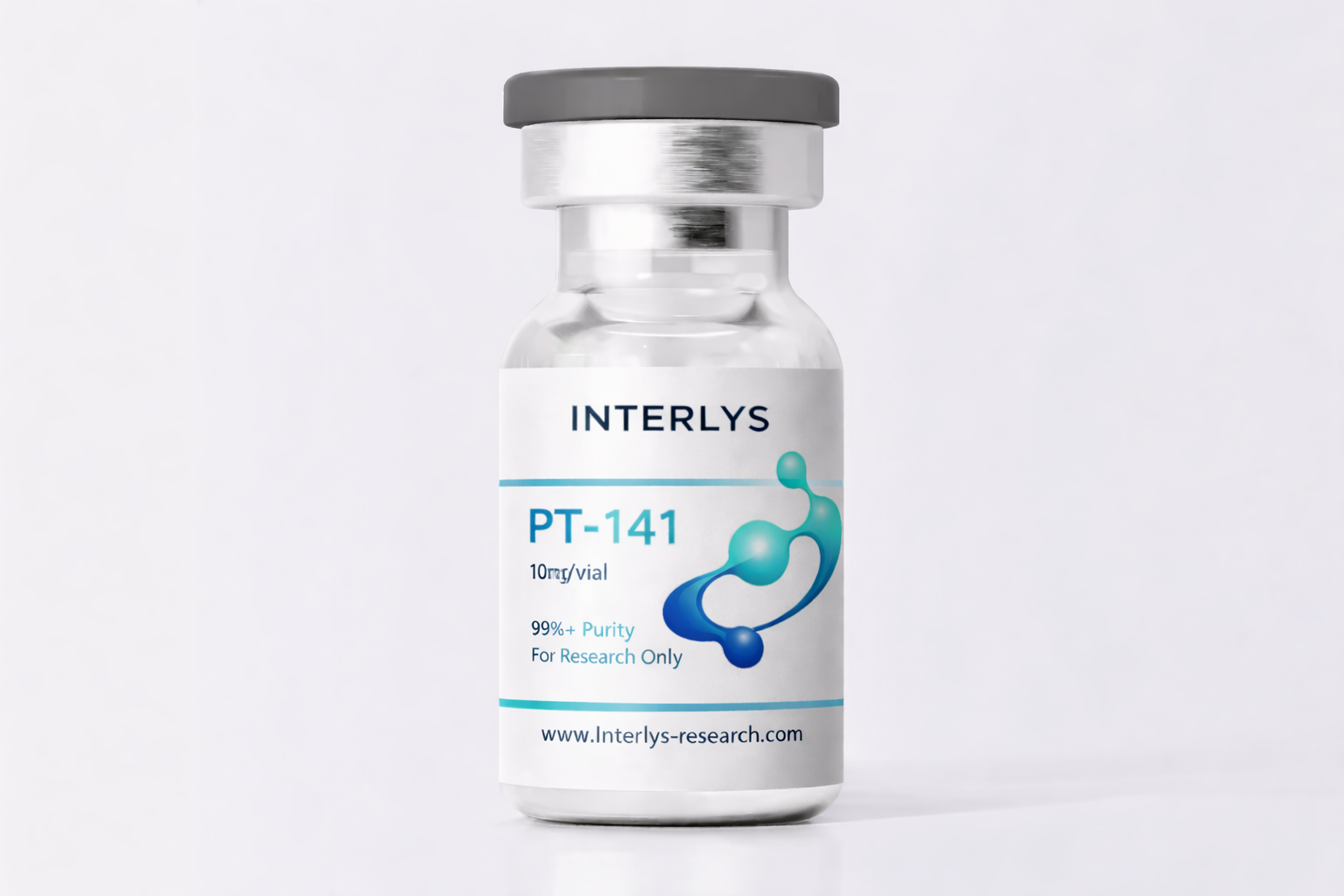
Description
PT-141, scientifically known as bremelanotide, is a synthetic peptide derived from melanocortin research and designed to act on melanocortin receptors in the central nervous system. It is used medically for hypoactive sexual desire disorder (HSDD) in premenopausal women, and it is not intended to “enhance sexual performance” in general populations.
Molecular Formula: C₅₀H₆₈N₁₄O₁₀
Molecular Weight: ~1025.16–1025.18 g/mol
CAS Number: 189691-06-3 (bremelanotide)
(Note: “bremelanotide acetate” can appear with a different CAS in reagent catalogs.)
What Are the Effects of PT-141?
PT-141 is recognized for several key effects:
-
Increased Sexual Desire/Arousal (Clinical Context): Demonstrated benefit for HSDD in approved clinical use for certain patients.
-
Central Nervous System Activation: Acts through brain pathways rather than directly on genital blood flow mechanisms.
-
Side-Effect Profile: Commonly reported effects include nausea, headache, and transient blood pressure increases; hyperpigmentation has also been discussed due to melanocortin activity.
How Does It Work?
PT-141 works as a melanocortin receptor agonist, with its clinical effect thought to be mainly linked to MC4R (and possibly MC3R) activity in brain regions involved in sexual motivation and desire. Mechanistic literature suggests MC4R activation can influence dopaminergic signaling in hypothalamic circuits associated with sexual desire.
Scientific Evidence and Research Status
Unlike many “research peptides,” PT-141 (bremelanotide) has substantial human clinical trial evidence and is FDA-approved for HSDD in premenopausal women under specific criteria and limitations of use.
Role in Sports and Performance Contexts
In “performance” circles, PT-141 is sometimes discussed for sexual-function effects. However, it is a prescription medication with real physiological effects (including cardiovascular changes), so non-medical use raises safety concerns. For competitive sport, athletes should always check the current WADA Prohibited List and consult medical/anti-doping resources when needed.
Standard Dosage
-
1.75 mg per dose, used as needed
-
No more than 1 dose within 24 hours
-
Do not use more than 8 doses per month
These values reflect official labeling/clinical-use ranges, and medical guidance is important to assess suitability and risk.
Storage Instructions
Once the peptides are reconstituted (mixed with bacteriostatic water), they must be stored in the fridge to maintain stability. After reconstitution, the peptides will remain stable for up to 30 days.
Lyophilization is a unique dehydration process, also known as cryodesiccation, where the peptides are frozen and then subjected to low pressure. This causes the water in the peptide vial to sublimate directly from solid to gas, leaving behind a stable, crystalline white structure known as lyophilized peptide. The puffy white powder can be stored at room temperature until you’re ready to reconstitute it with bacteriostatic water.
Once peptides have been received, it is imperative that they are kept cold and away from light. If the peptides will be used immediately, or in the next several days, weeks or months, short-term refrigeration under 4℃ (39℉) is generally acceptable. Lyophilized peptides are usually stable at room temperatures for several weeks or more, so if they will be utilized within weeks or months such storage is typically adequate.However, for longer term storage (several months to years) it is more preferable to store peptides in a freezer at -80℃ (-112℉). When storing peptides for months or even years, freezing is optimal in order to preserve the peptide’s stability.
Reviews
There are no reviews yet.