
Description
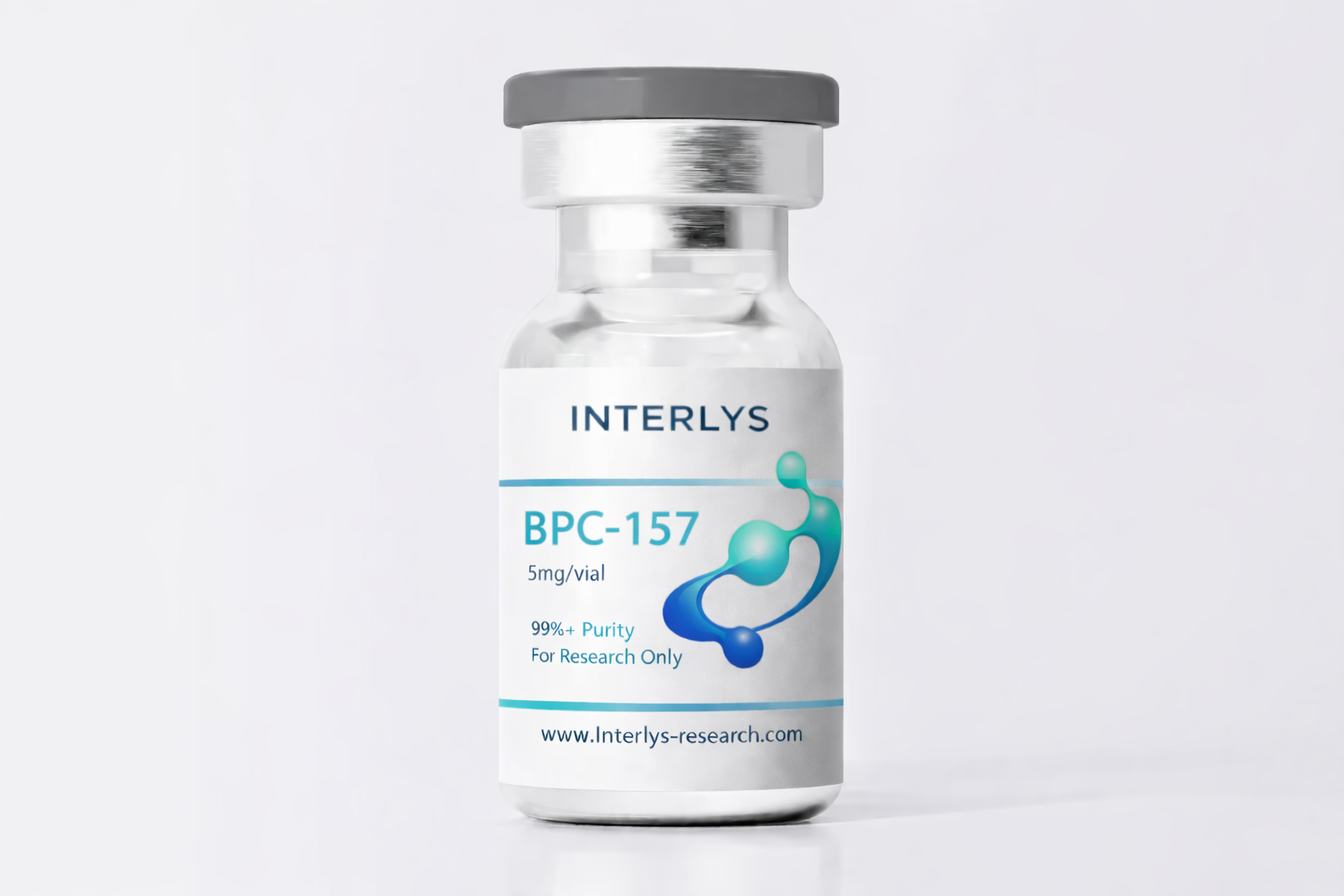
BPC-157 is a synthetic pentadecapeptide (15–amino acid peptide) originally investigated in relation to gastrointestinal protection and broader tissue-healing processes. It is often discussed in research contexts for potential effects on soft-tissue repair (tendon/ligament/muscle) and inflammation modulation, but it is not approved as a human medicine by major regulatory authorities.
Molecular Formula: C₆₂H₉₈N₁₆O₂₂
Molecular Weight: ~1419.5 g/mol
CAS Number: 137525-51-0
What Are the Effects of BPC-157?
BPC-157 is recognized (mainly from preclinical work) for several proposed effects:
-
Tissue Healing / Repair Interest: Frequently studied in animal models of tendon, muscle, ligament, and other tissue injuries.
-
Anti-inflammatory Effects: Reported to influence inflammatory signaling in various experimental models.
-
Angiogenesis / Blood-Vessel Signaling: Mechanistic work describes pro-angiogenic signaling (formation of new capillaries) as a potential contributor to repair effects.
How Does It Work?
BPC-157’s mechanisms are still being clarified, but modern reviews commonly highlight pathways involving:
-
Nitric oxide (NO) signaling and endothelial function
-
Angiogenesis-related signaling (including VEGF/VEGFR2-related activity)
-
Cell-survival pathways such as Akt/eNOS signaling in endothelial contexts
These mechanisms are used to explain reported improvements in repair models, especially in tissues with limited blood supply.
Scientific Evidence and Research Status
Most of the evidence for BPC-157 comes from cell studies and animal models, with relatively limited high-quality published human clinical data. Multiple recent reviews note the gap between extensive preclinical findings and the lack of robust human trials establishing safety and efficacy.
Role in Sports and Performance Contexts
BPC-157 has circulated in athletic and “recovery” communities due to its reputation for accelerating healing. However, anti-doping authorities emphasize that it is an experimental peptide and that athletes should avoid it.
-
USADA states BPC-157 is prohibited under WADA’s S0 (Unapproved Substances) category.
-
The WADA Prohibited List explicitly notes that S0 includes many substances “including but not limited to BPC-157.”
Standard Dosage
Administer 250-500 mcg daily, divided into two doses (e.g., morning and evening), for 4-6 weeks on followed by 2-4 weeks off.
These values reflect animal research protocols and do not establish a standardized human dose.
Storage Instructions
Once the peptides are reconstituted (mixed with bacteriostatic water), they must be stored in the fridge to maintain stability. After reconstitution, the peptides will remain stable for up to 30 days.
Lyophilization is a unique dehydration process, also known as cryodesiccation, where the peptides are frozen and then subjected to low pressure. This causes the water in the peptide vial to sublimate directly from solid to gas, leaving behind a stable, crystalline white structure known as lyophilized peptide. The puffy white powder can be stored at room temperature until you’re ready to reconstitute it with bacteriostatic water.
Once peptides have been received, it is imperative that they are kept cold and away from light. If the peptides will be used immediately, or in the next several days, weeks or months, short-term refrigeration under 4℃ (39℉) is generally acceptable. Lyophilized peptides are usually stable at room temperatures for several weeks or more, so if they will be utilized within weeks or months such storage is typically adequate.However, for longer term storage (several months to years) it is more preferable to store peptides in a freezer at -80℃ (-112℉). When storing peptides for months or even years, freezing is optimal in order to preserve the peptide’s stability.
Reviews
There are no reviews yet.