
Description
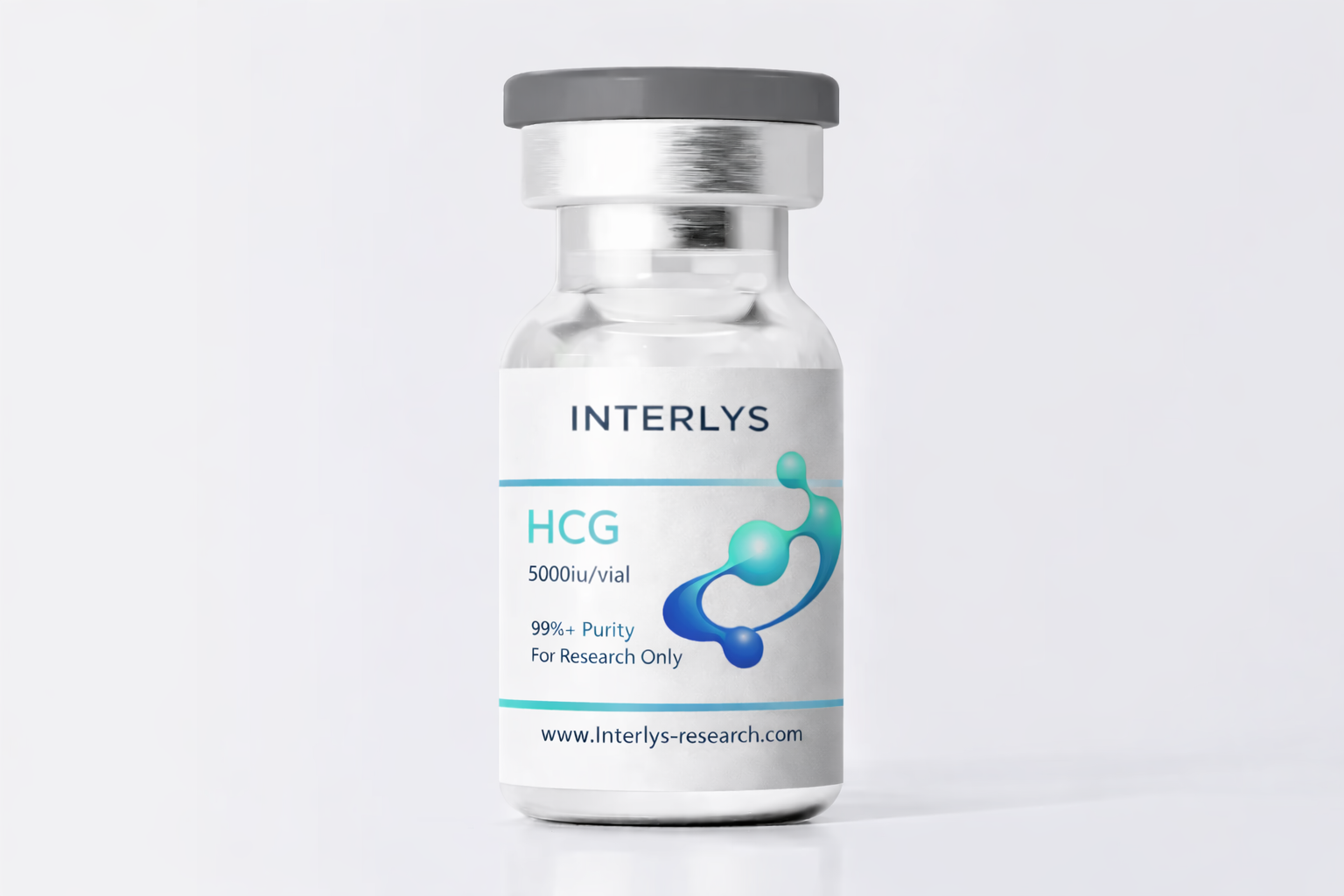
hCG, scientifically termed human chorionic gonadotropin, is a naturally occurring glycoprotein hormone produced mainly by the placenta during pregnancy. It plays a key role in supporting the corpus luteum and progesterone production in early pregnancy. Clinically, hCG is also used because it can activate the LH/hCG receptor (LHCGR), meaning it can mimic certain luteinizing-hormone (LH) effects in reproductive endocrinology.
Molecular Formula: Not expressed as one fixed formula (hCG is a glycosylated heterodimeric protein, and glycosylation varies).
Molecular Weight: ~36.7–37.9 kDa (varies with glycosylation).
CAS Number: 9002-61-3
What Are the Effects of hCG?
hCG is recognized for several key effects:
-
Pregnancy Support Signaling: Maintains luteal function and progesterone production in early pregnancy physiology.
-
LH-like Gonadal Stimulation: Because it binds the LH/hCG receptor, it can stimulate gonadal steroidogenesis in appropriate clinical contexts.
-
Induction of Final Oocyte Maturation/Ovulation (Clinical Use): Used in fertility medicine to trigger final follicular maturation/ovulation as part of monitored protocols.
How Does It Work?
hCG is a heterodimer composed of:
-
an α-subunit (shared with LH, FSH, and TSH),
-
and a β-subunit that confers hormone specificity.
It activates the LH/hCG receptor (LHCGR), which triggers downstream signaling (classically cAMP-mediated pathways) leading to gonadal effects such as steroid hormone production. Because hCG has distinct glycosylation and structural features compared with LH, it can show different kinetics and signaling behaviors in some contexts.
Scientific Evidence and Research Status
Unlike many “research peptides,” hCG is a long-established hormone in human physiology and has extensive clinical use in reproductive medicine and endocrinology. Its therapeutic effects and safety profile are therefore much better documented than experimental compounds, although outcomes and risks remain indication-dependent and require medical supervision.
Role in Sports and Performance Contexts
In sports contexts, hCG is sometimes misused because it can influence the reproductive hormone axis in males. Anti-doping rules address this directly:
-
WADA guidance states hCG and LH are prohibited in male athletes only.
Athletes should always verify medication status using official anti-doping resources (and apply for a TUE when appropriate).
Standard Dosage
Male hypogonadism protocols use 500-2,500 IU 2-3 times weekly for 3-6 months, with bloodwork to adjust. Female ovulation induction involves a single 5,000-10,000 IU IM trigger shot timed post-FSH.
These figures reflect clinical literature and labeling contexts, not a universal dosing rule.
Storage Instructions
Once the peptides are reconstituted (mixed with bacteriostatic water), they must be stored in the fridge to maintain stability. After reconstitution, the peptides will remain stable for up to 30 days.
Lyophilization is a unique dehydration process, also known as cryodesiccation, where the peptides are frozen and then subjected to low pressure. This causes the water in the peptide vial to sublimate directly from solid to gas, leaving behind a stable, crystalline white structure known as lyophilized peptide. The puffy white powder can be stored at room temperature until you’re ready to reconstitute it with bacteriostatic water.
Once peptides have been received, it is imperative that they are kept cold and away from light. If the peptides will be used immediately, or in the next several days, weeks or months, short-term refrigeration under 4℃ (39℉) is generally acceptable. Lyophilized peptides are usually stable at room temperatures for several weeks or more, so if they will be utilized within weeks or months such storage is typically adequate.However, for longer term storage (several months to years) it is more preferable to store peptides in a freezer at -80℃ (-112℉). When storing peptides for months or even years, freezing is optimal in order to preserve the peptide’s stability.
Reviews
There are no reviews yet.