
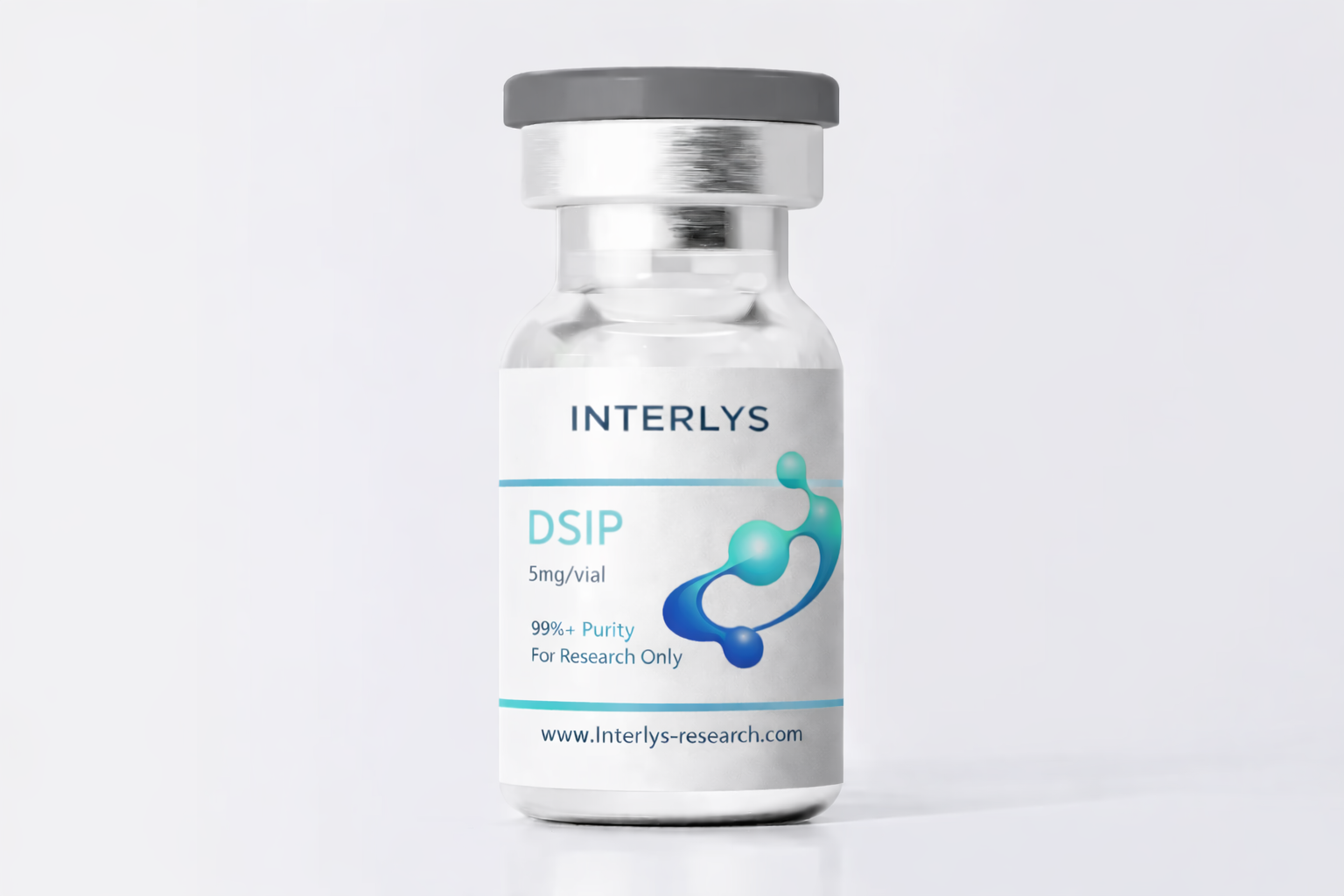
Description
DSIP, scientifically termed Delta Sleep-Inducing Peptide, is a naturally occurring nonapeptide (9 amino acids) originally reported in the 1970s after being isolated from rabbit cerebral venous blood under sleep-related experimental conditions. It has been investigated as a neuropeptide potentially involved in sleep-related physiology and broader stress/endocrine signaling, although findings across studies have been mixed and sometimes contradictory.
Molecular Formula: C₃₅H₄₈N₁₀O₁₅
Molecular Weight: ~848.8 g/mol
CAS Number: 62568-57-4
What Are the Effects of DSIP?
DSIP is recognized (mainly from experimental literature) for several discussed effects:
-
Sleep / EEG Modulation Interest: Initially reported to increase slow-wave (delta) EEG activity in certain animal infusion models, though replication across species/studies is not consistent.
-
Stress- and Endocrine-Related Interest: Literature has discussed possible interactions with stress and endocrine mediators, but definitive physiological roles remain debated.
-
Broader “Multifunctional Peptide” Descriptions: Some modern reviews and papers describe DSIP as multifunctional, but this reflects heterogeneous evidence (varied models and endpoints).
How Does It Work?
DSIP’s mechanism is not fully established. Reviews note that its receptor/precursor biology has not been clearly confirmed, and multiple pathways have been proposed depending on model and endpoint. Some experimental discussions suggest DSIP may influence neuronal activity through receptor-mediated mechanisms (including proposed involvement of NMDA-related signaling in certain studies), but the overall mechanistic picture remains uncertain.
Scientific Evidence and Research Status
DSIP has a long research history, but the evidence base is uneven:
-
Early animal work reported sleep-related EEG changes under specific experimental infusion conditions.
-
Later summaries emphasize that results have been inconsistent, and that human evidence is limited (with at least one report describing only minor effects in normal men).
Overall, DSIP is best characterized as a peptide of research interest, rather than a broadly standardized, clinically validated therapeutic agent.
Role in Sports and Performance Contexts
In “nootropic” or recovery communities, DSIP is sometimes mentioned for sleep optimization. However, given the uncertainty around reproducible human effects and the variability in non-medical products, claims should be treated cautiously. Competitive athletes should always verify substances against the current WADA Prohibited List and rely on official medical/anti-doping guidance when needed.
Standard Dosage
Use 100-250 mcg once daily before sleep, for cycles of 4 weeks on followed by 4 weeks off.
Storage Instructions
Once the peptides are reconstituted (mixed with bacteriostatic water), they must be stored in the fridge to maintain stability. After reconstitution, the peptides will remain stable for up to 30 days.
Lyophilization is a unique dehydration process, also known as cryodesiccation, where the peptides are frozen and then subjected to low pressure. This causes the water in the peptide vial to sublimate directly from solid to gas, leaving behind a stable, crystalline white structure known as lyophilized peptide. The puffy white powder can be stored at room temperature until you’re ready to reconstitute it with bacteriostatic water.
Once peptides have been received, it is imperative that they are kept cold and away from light. If the peptides will be used immediately, or in the next several days, weeks or months, short-term refrigeration under 4℃ (39℉) is generally acceptable. Lyophilized peptides are usually stable at room temperatures for several weeks or more, so if they will be utilized within weeks or months such storage is typically adequate.However, for longer term storage (several months to years) it is more preferable to store peptides in a freezer at -80℃ (-112℉). When storing peptides for months or even years, freezing is optimal in order to preserve the peptide’s stability.
Reviews
There are no reviews yet.