
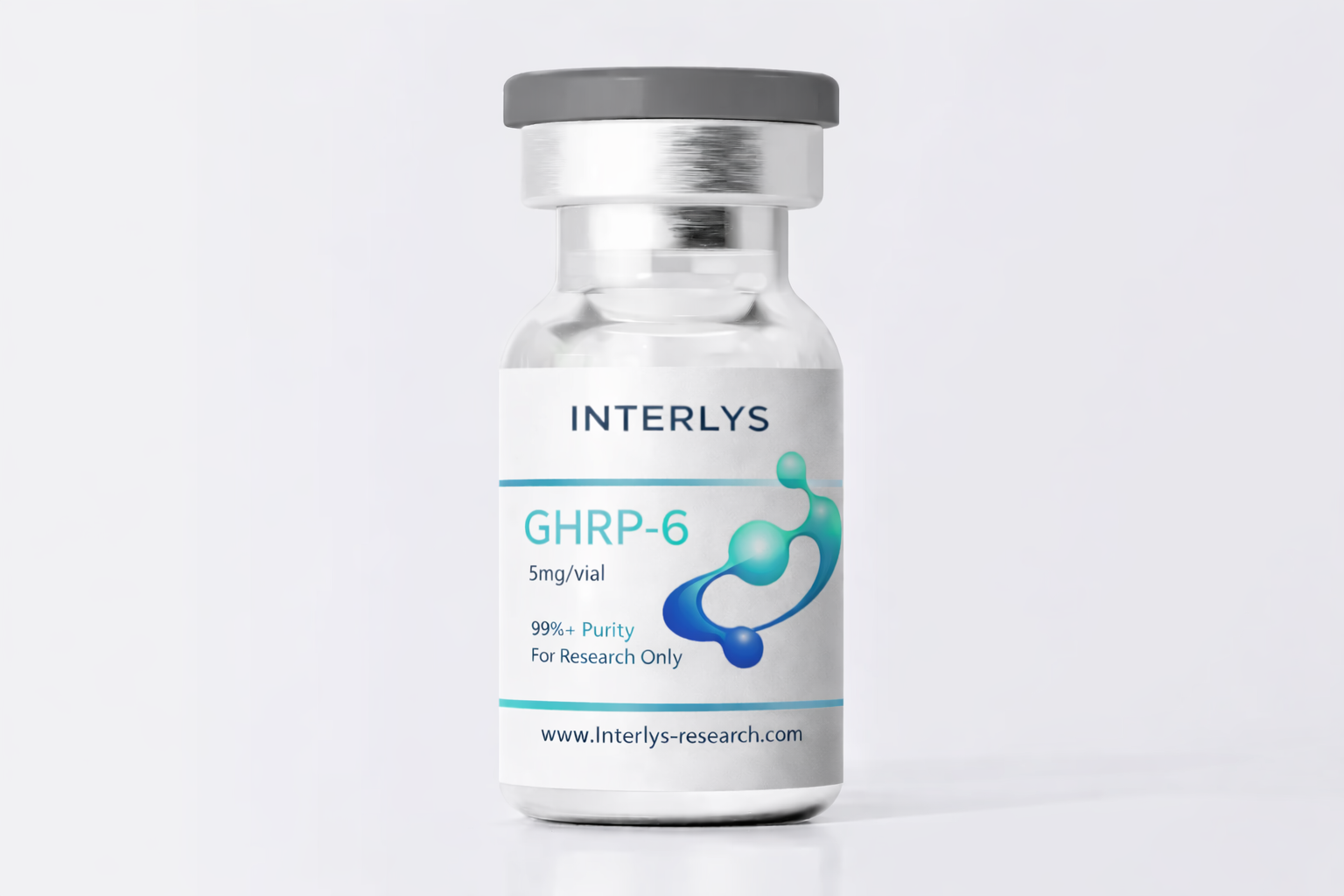
Description
GHRP-6, scientifically termed Growth Hormone-Releasing Peptide-6, is a synthetic hexapeptide (6 amino acids) developed as a growth hormone secretagogue. It stimulates endogenous growth hormone (GH) release primarily by activating the growth hormone secretagogue receptor (GHS-R1a), also known as the ghrelin receptor.
Molecular Formula: C₄₆H₅₆N₁₂O₆
Molecular Weight: ~873.0 g/mol
CAS Number: 87616-84-0
What Are the Effects of GHRP-6?
GHRP-6 is recognized for several key effects:
-
Increased Growth Hormone Secretion: Stimulates pulsatile GH release from the pituitary gland.
-
Potential Indirect IGF-1 Changes: Because GH can increase hepatic IGF-1, IGF-1 may be influenced indirectly depending on context.
-
Appetite Stimulation: As a ghrelin-receptor agonist, it is commonly associated with increased hunger in practice discussions.
-
Neuroendocrine Effects (Research): Some studies have examined impacts on other endocrine axes and sleep-related variables depending on dose/route.
How Does It Work?
GHRP-6 binds to GHS-R1a, triggering signaling pathways that increase GH secretion from the anterior pituitary. Its activity is related to ghrelin-like mechanisms and can show synergistic/additive effects when combined with other GH-stimulating signals (studied experimentally).
Because GH release is naturally pulsatile and influenced by sleep, nutrition, stress, and baseline endocrine status, individual responses can vary.
Scientific Evidence and Research Status
GHRP-6 has been studied in humans and animals as a GH secretagogue, including investigations of different routes of administration and endocrine response profiles. For example, human studies have evaluated acute GH responses to controlled administration of GHRP-6.
However, it is not broadly established as a standardized long-term therapeutic agent in routine clinical practice, and long-term safety/benefit profiles outside controlled settings are not as robustly defined as for approved metabolic drugs.
Role in Sports and Performance Contexts
In athletic and physique contexts, GHRP-6 has been discussed because it affects the GH axis. However, endocrine manipulation for performance is ethically and medically problematic. The WADA Prohibited List explicitly includes GH-releasing peptides (GHRPs), including GHRP-6, under prohibited peptide hormones/growth factors categories.
Standard Dosage
Use 100-200 mcg per dose, 2-3 times daily (morning, post-workout, bedtime), totaling 300-600 mcg per day. Cycles run 8-12 weeks followed by 4 weeks off.
These figures reflect controlled research designs and do not define a standardized clinical dosage for general use.
Storage Instructions
Once the peptides are reconstituted (mixed with bacteriostatic water), they must be stored in the fridge to maintain stability. After reconstitution, the peptides will remain stable for up to 30 days.
Lyophilization is a unique dehydration process, also known as cryodesiccation, where the peptides are frozen and then subjected to low pressure. This causes the water in the peptide vial to sublimate directly from solid to gas, leaving behind a stable, crystalline white structure known as lyophilized peptide. The puffy white powder can be stored at room temperature until you’re ready to reconstitute it with bacteriostatic water.
Once peptides have been received, it is imperative that they are kept cold and away from light. If the peptides will be used immediately, or in the next several days, weeks or months, short-term refrigeration under 4℃ (39℉) is generally acceptable. Lyophilized peptides are usually stable at room temperatures for several weeks or more, so if they will be utilized within weeks or months such storage is typically adequate.However, for longer term storage (several months to years) it is more preferable to store peptides in a freezer at -80℃ (-112℉). When storing peptides for months or even years, freezing is optimal in order to preserve the peptide’s stability.
Reviews
There are no reviews yet.