
Description
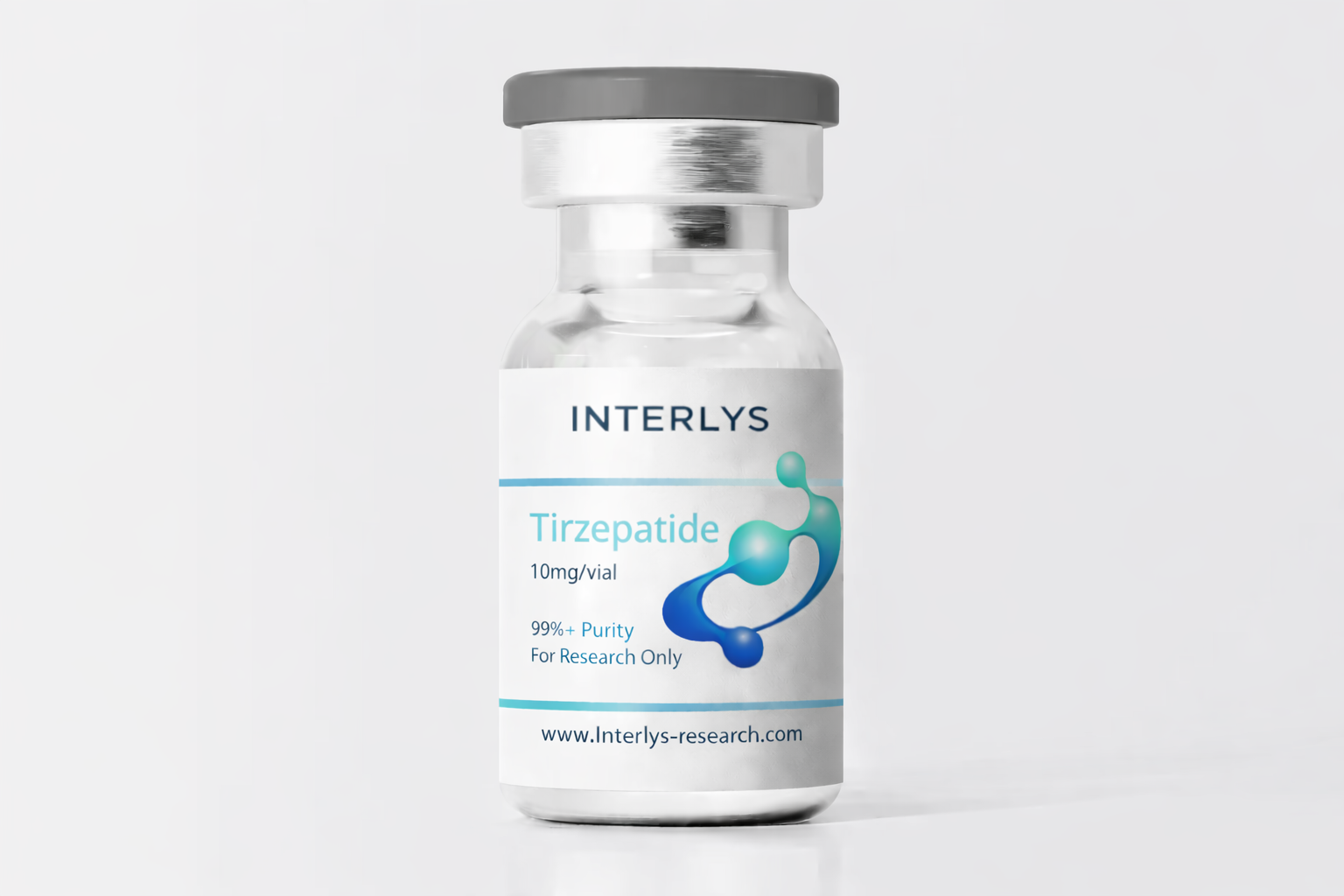
Tirzepatide
Tirzepatide is a synthetic peptide that acts as a dual agonist of the GLP-1 (glucagon-like peptide-1) and GIP (glucose-dependent insulinotropic polypeptide) receptors. It is designed to regulate glucose metabolism, insulin secretion, and appetite control. Tirzepatide was developed in the 21st century as part of research into incretin-based therapies for metabolic disorders, particularly type 2 diabetes and obesity.
Molecular Information
-
Molecular Formula: C₂₂₅H₃₄₈N₄₈O₆₈
-
Molecular Weight: ~4813.45 g/mol
-
CAS Number: 2023788-19-2
What Are the Effects of Tirzepatide?
Tirzepatide is recognized for several key effects:
-
Improved Glycemic Control: Enhances insulin secretion in a glucose-dependent manner and reduces glucagon release.
-
Weight Reduction: Decreases appetite and caloric intake by acting on central satiety pathways.
-
Metabolic Regulation: Improves insulin sensitivity and lipid metabolism.
-
Delayed Gastric Emptying: Slows digestion, contributing to prolonged satiety.
How Does It Work?
Tirzepatide functions by simultaneously activating GLP-1 and GIP receptors, two incretin hormones naturally released after food intake.
GLP-1 increases insulin secretion, suppresses glucagon release, and reduces appetite, while GIP enhances insulin response and may improve adipose tissue metabolism. The dual-receptor activity of tirzepatide results in synergistic metabolic effects, leading to improved blood glucose control and significant weight loss.
Scientific Evidence and Research Status
Unlike many research peptides, tirzepatide has been extensively studied in human clinical trials, particularly for the treatment of type 2 diabetes and obesity. Large-scale studies have demonstrated significant reductions in HbA1c levels and body weight. However, ongoing research continues to evaluate its long-term cardiovascular outcomes, safety profile, and broader metabolic effects.
Role in Sports and Performance Contexts
Tirzepatide has gained attention outside medical settings due to its pronounced effects on body weight reduction and appetite suppression. However, its use for performance enhancement or physique modification is not approved and lacks ethical justification. While not currently classified as a traditional anabolic or stimulant agent, its off-label use raises concerns regarding fairness, health risks, and misuse in competitive environments.
Standard Dosage
Initiate at 2.5 mg once weekly for 4 weeks, regardless of indication, to build tolerance. Inject into abdomen, thigh, or upper arm any time of day, with or without food.
Increase to 5 mg weekly (weeks 5-8), then 7.5 mg (weeks 9-12), 10 mg (weeks 13-16), and 12.5-15 mg maintenance from week 17 onward based on response and tolerability.
Concentration Breakdown
Reconstituting 5 mg (5000 mcg) of tirzepatide in 2 mL yields:
-
Concentration:
5000 mcg ÷ 2 mL = 2500 mcg/mL
Weekly Protocol (4 Weeks)
A commonly referenced starting dose in clinical research is 2.5 mg once per week.
-
Dose: 2500 mcg
-
Volume:
2500 mcg ÷ 2500 mcg/mL = 1.0 mL -
Insulin syringe equivalent:
1.0 mL = 100 units (two full 50-unit syringes) -
Total doses: 4 injections
-
Vials required: 2 vials
Higher Weekly Protocol (4 Weeks)
A higher weekly dose sometimes discussed in advanced protocols is 5 mg once per week.
-
Dose: 5000 mcg
-
Volume:
5000 mcg ÷ 2500 mcg/mL = 2.0 mL -
Insulin syringe equivalent:
2.0 mL = 200 units -
Total doses: 4 injections
-
Vials required: 4 vials
Storage Instructions
Once the peptides are reconstituted (mixed with bacteriostatic water), they must be stored in the fridge to maintain stability. After reconstitution, the peptides will remain stable for up to 30 days.
Lyophilization is a unique dehydration process, also known as cryodesiccation, where the peptides are frozen and then subjected to low pressure. This causes the water in the peptide vial to sublimate directly from solid to gas, leaving behind a stable, crystalline white structure known as lyophilized peptide. The puffy white powder can be stored at room temperature until you’re ready to reconstitute it with bacteriostatic water.
Once peptides have been received, it is imperative that they are kept cold and away from light. If the peptides will be used immediately, or in the next several days, weeks or months, short-term refrigeration under 4℃ (39℉) is generally acceptable. Lyophilized peptides are usually stable at room temperatures for several weeks or more, so if they will be utilized within weeks or months such storage is typically adequate.However, for longer term storage (several months to years) it is more preferable to store peptides in a freezer at -80℃ (-112℉). When storing peptides for months or even years, freezing is optimal in order to preserve the peptide’s stability.
Reviews
There are no reviews yet.