
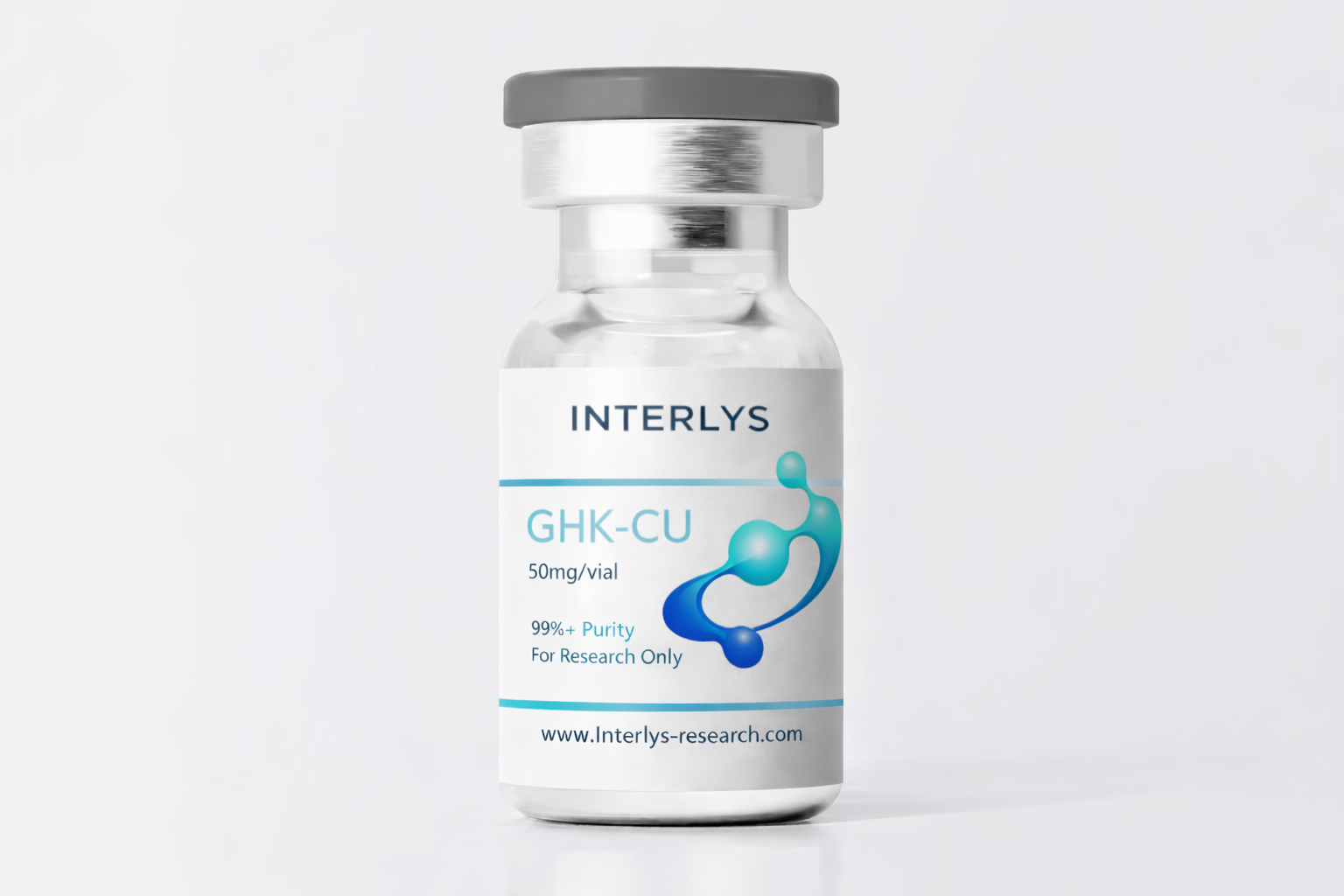
Description
GHK-Cu, commonly called Copper Peptide or Copper Tripeptide-1, is a naturally occurring copper complex of the tripeptide glycyl-L-histidyl-L-lysine (GHK) bound to copper(II). It was first identified in human plasma and has been studied for its potential roles in tissue repair, skin remodeling, and anti-inflammatory activity.
Molecular Formula:
-
GHK (peptide alone): C₁₄H₂₄N₆O₄
-
GHK-Cu (copper complex): commonly listed as C₁₄H₂₂CuN₆O₄
Molecular Weight:
-
GHK: 340.38 g/mol
-
GHK-Cu complex: values vary by salt/hydration form (often listed ~401–402 g/mol for certain commercial forms).
CAS Number: GHK-Cu can appear under multiple CAS numbers depending on the exact form/salt used in catalogs (commonly seen: 89030-95-5, and some listings include other catalog-specific entries).
What Are the Effects of GHK-Cu?
GHK-Cu is recognized for several key functions:
-
Enhanced Healing / Tissue Repair: Often studied for wound-healing support and tissue regeneration signaling.
-
Skin Remodeling Interest: Associated with collagen/glycosaminoglycan-related skin processes and anti-aging cosmetic interest.
-
Anti-inflammatory and Antioxidant Effects: Frequently described as modulating inflammation and oxidative stress pathways in skin-related contexts.
-
Hair/Scalp Interest: Some cosmetic discussions and suppliers highlight potential relevance to hair/scalp appearance, though quality of evidence varies widely by claim type.
How Does It Work?
GHK-Cu works mainly through its strong ability to bind copper(II) and potentially act as a copper-delivery/signaling complex in tissues. Mechanistic literature describes copper coordination involving the histidine imidazole nitrogen and peptide backbone nitrogens, привiding a stable complex that can interact with biological environments.
In skin/tissue contexts, it is often discussed as influencing pathways linked to extracellular matrix remodeling and cellular responses involved in repair, although the exact downstream effects can depend on formulation, concentration, and biological setting.
Scientific Evidence and Research Status
GHK and GHK-Cu are well-described biochemically, and the peptide is naturally present in humans. However, many strong marketing claims (especially in non-medical settings) go beyond what is firmly proven by large, high-quality human clinical trials. Most evidence for specific “regenerative” outcomes is a mix of mechanistic work, cell/animal research, and limited human data depending on the endpoint studied.
Role in Sports and Performance Contexts
In sports and physique circles, GHK-Cu is sometimes mentioned for “recovery” or connective-tissue/skin-related goals. That said, these uses are typically non-standardized, and the evidence base is not comparable to approved medical therapies. In regulated sport, athletes should be cautious with any bioactive compounds and verify rules through official anti-doping resources when needed.
Standard Dosage
Administer 1-2 mg daily via subcutaneous injection (morning preferred), or use 2-4% topical products morning and evening post-cleansing. Continue 4-6 weeks per cycle for anti-aging effects.
Up to 2-5 mg daily injections split into 1-2 doses suit intensive tissue repair.
Storage Instructions
Once the peptides are reconstituted (mixed with bacteriostatic water), they must be stored in the fridge to maintain stability. After reconstitution, the peptides will remain stable for up to 30 days.
Lyophilization is a unique dehydration process, also known as cryodesiccation, where the peptides are frozen and then subjected to low pressure. This causes the water in the peptide vial to sublimate directly from solid to gas, leaving behind a stable, crystalline white structure known as lyophilized peptide. The puffy white powder can be stored at room temperature until you’re ready to reconstitute it with bacteriostatic water.
Once peptides have been received, it is imperative that they are kept cold and away from light. If the peptides will be used immediately, or in the next several days, weeks or months, short-term refrigeration under 4℃ (39℉) is generally acceptable. Lyophilized peptides are usually stable at room temperatures for several weeks or more, so if they will be utilized within weeks or months such storage is typically adequate.However, for longer term storage (several months to years) it is more preferable to store peptides in a freezer at -80℃ (-112℉). When storing peptides for months or even years, freezing is optimal in order to preserve the peptide’s stability.
Reviews
There are no reviews yet.