
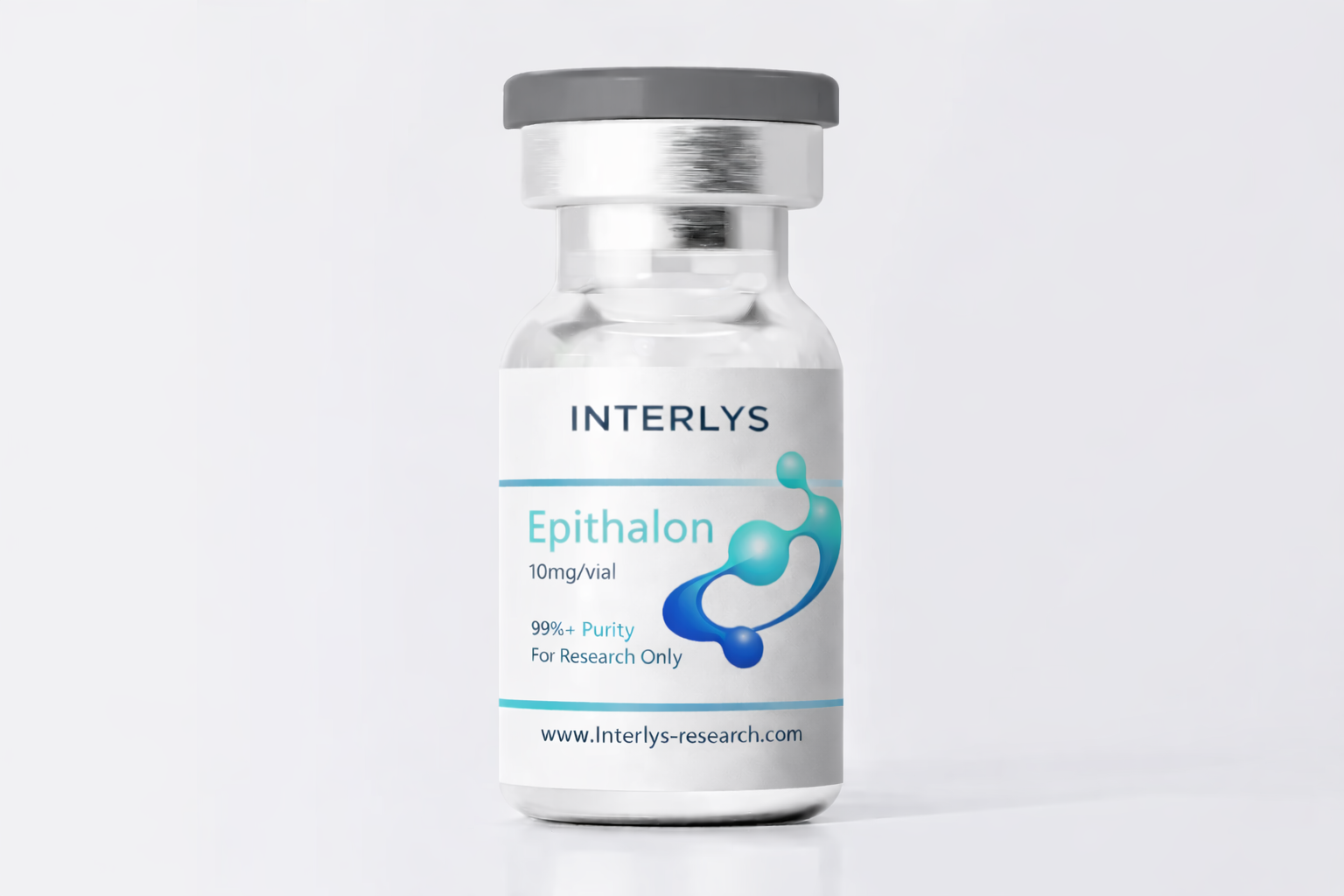
Description
Epithalon (also written Epitalon) is a synthetic tetrapeptide (amino-acid sequence: Ala–Glu–Asp–Gly) originally studied in connection with pineal gland peptides and age-related biological processes. It has attracted interest in research on cellular aging, circadian-related signaling, and telomere/telomerase-associated pathways, although many claims circulating online go beyond what is firmly established by large, high-quality human trials.
Molecular Formula: C₁₄H₂₂N₄O₉
Molecular Weight: 390.35 g/mol
CAS Number: 307297-39-8
What Are the Effects of Epithalon?
Epithalon is commonly discussed for several potential effects (based on preclinical data and limited clinical reporting):
-
Aging-Related Cellular Signaling Interest: Studied in contexts linked to cellular senescence and long-term biological regulation.
-
Telomerase / Telomere-Related Interest: Some studies and reviews discuss associations with telomerase activity and telomere dynamics, but the clinical significance remains debated.
-
Cellular Proliferation / Repair Signaling (Preclinical): In vitro studies report effects on cell proliferation under certain experimental conditions.
How Does It Work?
Epithalon’s proposed mechanisms are still being clarified. Research discussions often focus on its potential influence on gene expression and cellular regulatory pathways, including hypotheses involving telomerase-related activity and broader cellular homeostasis. Much of the detailed mechanistic evidence comes from cell and animal models, so direct translation to consistent human outcomes is not fully established.
Scientific Evidence and Research Status
Epithalon has a mixed evidence base:
-
Preclinical evidence (cell/animal) is more abundant, including studies examining proliferation and aging-related biomarkers.
-
Human evidence exists but is limited and heterogeneous, with different study designs, endpoints, and reporting quality. Reviews aimed at researchers emphasize that dosing, delivery methods, and outcome measures vary substantially.
Overall, Epithalon is best characterized as a compound of research interest rather than a universally standardized, globally approved therapy.
Role in Sports and Performance Contexts
Epithalon is sometimes discussed in “longevity” or physique communities because of its association with aging biology. However, as with many experimental peptides, use outside controlled settings raises concerns about product quality, unknown long-term safety, and misuse.
For competitive athletes, the safest approach is to check the current WADA Prohibited List, which includes broad categories covering peptide hormones/growth factors and related substances (updated annually).
Standard Dosage
Use 5-10 mg per cycle (1 mg daily subcutaneous for 10 days or split twice daily).
These figures reflect ranges reported in the literature and do not establish an “approved” or universally safe dosage.
Storage Instructions
Once the peptides are reconstituted (mixed with bacteriostatic water), they must be stored in the fridge to maintain stability. After reconstitution, the peptides will remain stable for up to 30 days.
Lyophilization is a unique dehydration process, also known as cryodesiccation, where the peptides are frozen and then subjected to low pressure. This causes the water in the peptide vial to sublimate directly from solid to gas, leaving behind a stable, crystalline white structure known as lyophilized peptide. The puffy white powder can be stored at room temperature until you’re ready to reconstitute it with bacteriostatic water.
Once peptides have been received, it is imperative that they are kept cold and away from light. If the peptides will be used immediately, or in the next several days, weeks or months, short-term refrigeration under 4℃ (39℉) is generally acceptable. Lyophilized peptides are usually stable at room temperatures for several weeks or more, so if they will be utilized within weeks or months such storage is typically adequate.However, for longer term storage (several months to years) it is more preferable to store peptides in a freezer at -80℃ (-112℉). When storing peptides for months or even years, freezing is optimal in order to preserve the peptide’s stability.
Reviews
There are no reviews yet.