
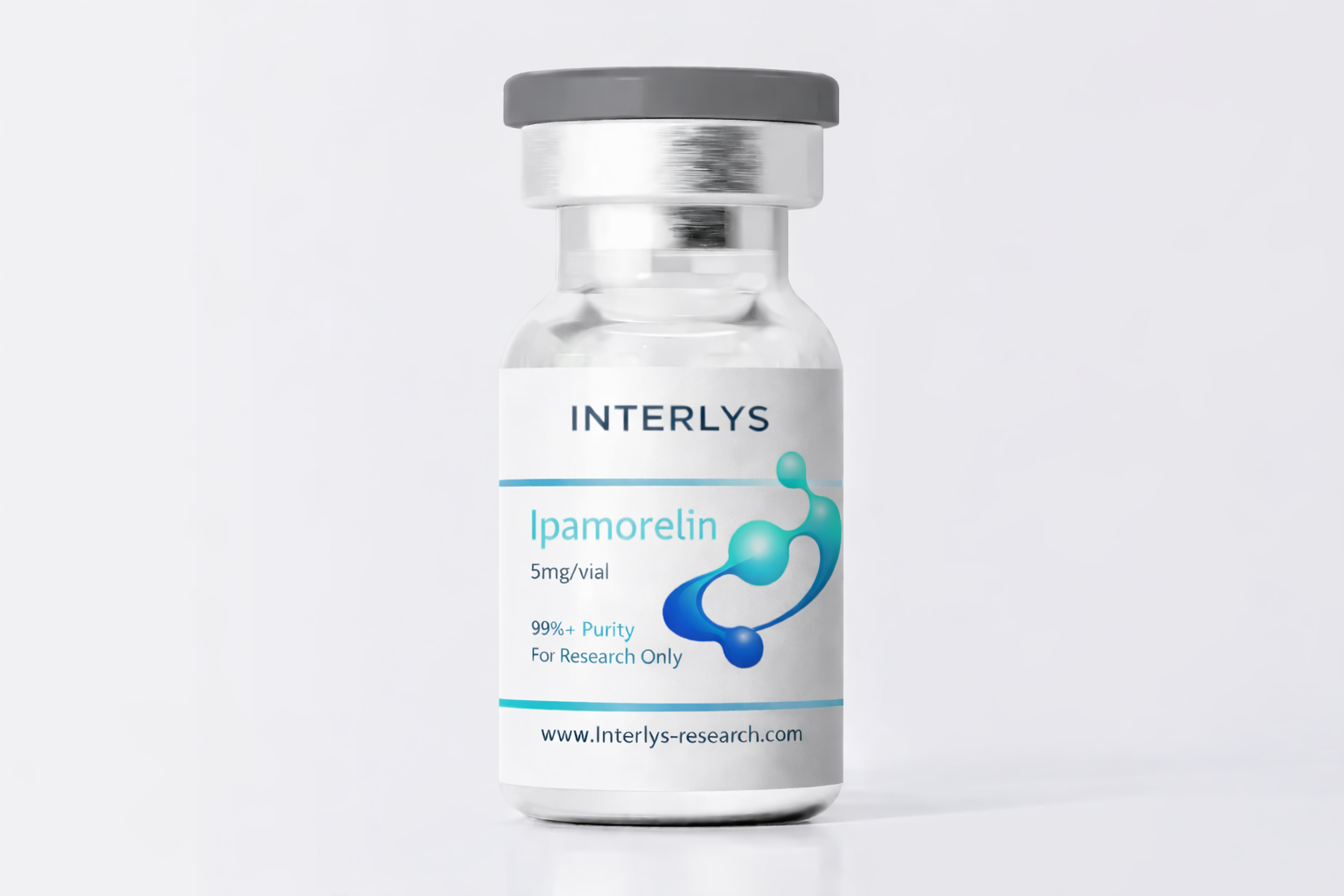
Description
Ipamorelin (development code NNC 26-0161) is a synthetic peptide classified as a growth hormone secretagogue. It was developed to stimulate endogenous growth hormone (GH) release by acting on the growth hormone secretagogue (ghrelin) receptor, GHS-R1a. A key point often highlighted in the literature is that ipamorelin was designed to be more selective for GH release than some earlier GHRPs.
Molecular Formula: C₃₈H₄₉N₉O₅
Molecular Weight: ~711.9 g/mol
CAS Number: 170851-70-4
What Are the Effects of Ipamorelin?
Ipamorelin is recognized for several key effects:
-
Increased Growth Hormone Secretion: Stimulates pulsatile GH release from the pituitary gland.
-
Indirect Increase in IGF-1: Because GH can stimulate hepatic IGF-1 production, IGF-1 may rise indirectly depending on context and individual response.
-
Appetite/Side-effect Profile Interest: Compared with some older GHRPs, ipamorelin is often described as having a more selective endocrine profile in research settings.
How Does It Work?
Ipamorelin works primarily by binding to GHS-R1a (ghrelin receptor), activating signaling pathways that trigger GH release from the anterior pituitary. Pharmacological profiling has shown its GH-releasing effect is mediated via a GHRP-like receptor pathway, and research in animals suggested it did not meaningfully increase ACTH/cortisol the way some other secretagogues can.
Because GH secretion is naturally pulsatile and influenced by sleep, nutrition, stress, and baseline endocrine status, response magnitude can vary between individuals.
Scientific Evidence and Research Status
Ipamorelin has been investigated in experimental and clinical research contexts as a GH secretagogue. Early peer-reviewed work characterized its potency and selectivity in animal models and supported its profile as a candidate for further development. However, it is not established as a widely standardized therapy across routine clinical practice, and long-term outcome data remain more limited than for approved metabolic drugs.
Role in Sports and Performance Contexts
In athletic and physique contexts, ipamorelin is discussed because it influences the GH/IGF-1 axis. However, endocrine manipulation for performance raises ethical and health concerns.
The World Anti-Doping Agency (WADA) prohibits growth hormone releasing factors, including GH-releasing peptides (GHRPs) as a category on the Prohibited List (updated yearly).
Standard Dosage
Administer 200-300 mcg per dose, 2-3 times daily (morning, post-workout, bedtime), totaling 400-900 mcg daily. Cycles run 8-12 weeks followed by 4 weeks off.
Because ipamorelin directly affects endocrine signaling, any real-world use requires medical oversight and careful monitoring.
Storage Instructions
Once the peptides are reconstituted (mixed with bacteriostatic water), they must be stored in the fridge to maintain stability. After reconstitution, the peptides will remain stable for up to 30 days.
Lyophilization is a unique dehydration process, also known as cryodesiccation, where the peptides are frozen and then subjected to low pressure. This causes the water in the peptide vial to sublimate directly from solid to gas, leaving behind a stable, crystalline white structure known as lyophilized peptide. The puffy white powder can be stored at room temperature until you’re ready to reconstitute it with bacteriostatic water.
Once peptides have been received, it is imperative that they are kept cold and away from light. If the peptides will be used immediately, or in the next several days, weeks or months, short-term refrigeration under 4℃ (39℉) is generally acceptable. Lyophilized peptides are usually stable at room temperatures for several weeks or more, so if they will be utilized within weeks or months such storage is typically adequate.However, for longer term storage (several months to years) it is more preferable to store peptides in a freezer at -80℃ (-112℉). When storing peptides for months or even years, freezing is optimal in order to preserve the peptide’s stability.
Reviews
There are no reviews yet.