
Description
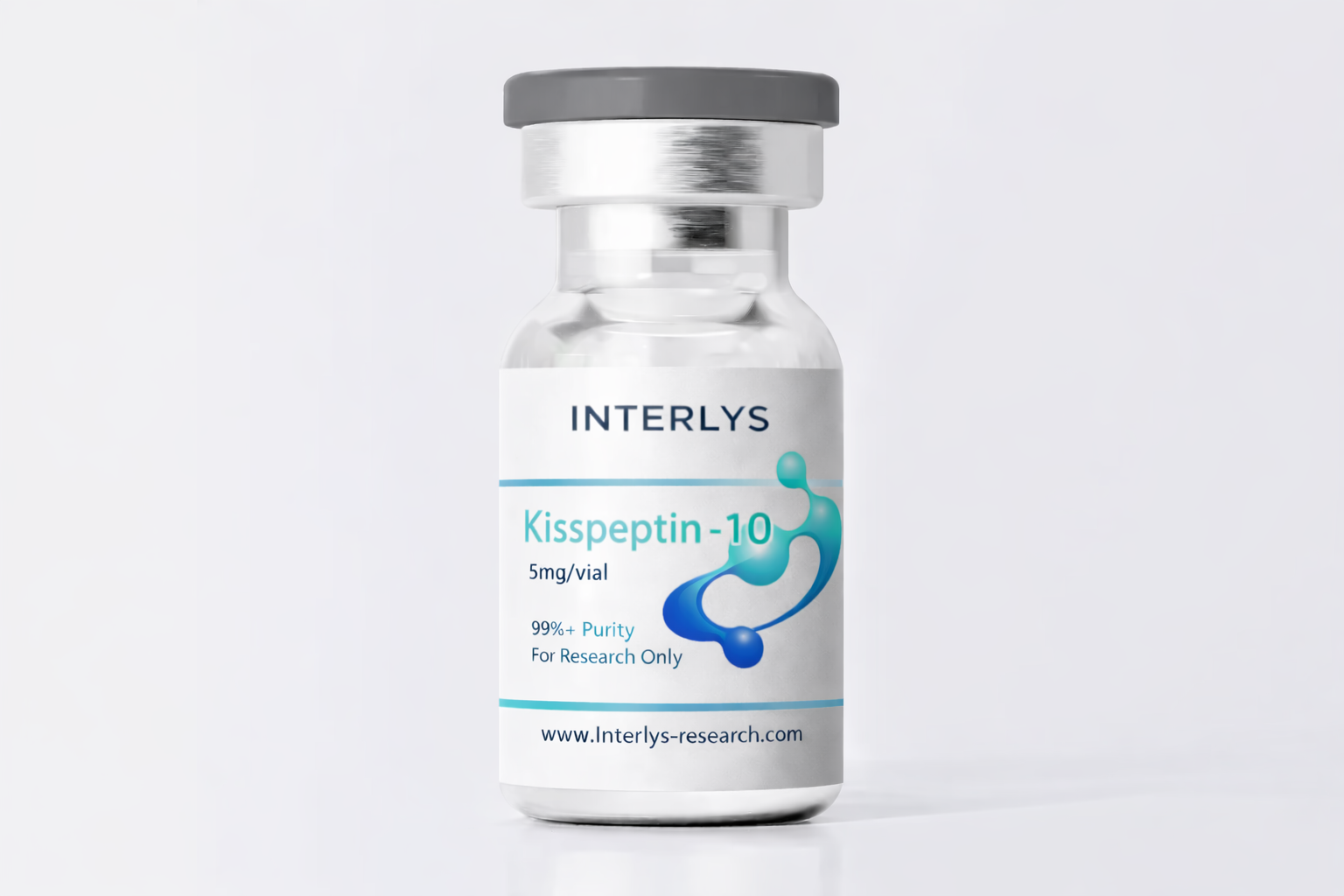
Kisspeptin-10, often abbreviated Kp-10, is a short synthetic peptide corresponding to the biologically active C-terminal region of kisspeptin (encoded by the KISS1 gene). It is best known for its role in activating the hypothalamic–pituitary–gonadal (HPG) axis by stimulating GnRH release, which then increases LH and FSH secretion. Because of this, kisspeptin-10 has been widely used in endocrine research to study reproductive hormone regulation.
Molecular Formula: C₆₃H₈₃N₁₇O₁₄
Molecular Weight: ~1302.4–1302.5 g/mol
CAS Number: 374675-21-5 (human kisspeptin-10, amide)
What Are the Effects of Kisspeptin-10?
Kisspeptin-10 is recognized for several key effects:
-
LH and FSH Stimulation: Produces a rapid increase in LH (and often FSH) by activating upstream GnRH signaling.
-
Activation of Reproductive Axis: Used to probe or trigger HPG-axis activity in research and clinical investigative settings.
-
Potential Testosterone-Related Effects (Indirect): By increasing LH, downstream gonadal steroid production may be influenced depending on sex and physiological context.
How Does It Work?
Kisspeptin-10 binds to the kisspeptin receptor (KISS1R, also called GPR54) on GnRH neurons. This stimulates GnRH release, which then signals the pituitary to secrete LH and FSH. The result is a strong upstream “switch” for reproductive hormone signaling, which is why kisspeptin peptides are central tools in reproductive endocrinology research.
Scientific Evidence and Research Status
Kisspeptin biology is well established in humans, and kisspeptin peptides (including different lengths such as kisspeptin-10 and kisspeptin-54) have been studied in human experimental settings to characterize endocrine responses. However, applications vary by peptide form, dose, and clinical context, and not all uses are standardized as routine therapies worldwide.
Role in Sports and Performance Contexts
Because kisspeptin signaling can stimulate GnRH → LH and influence downstream sex-hormone pathways, it has attracted attention outside medicine. In regulated sport, WADA explicitly lists “kisspeptin and its agonist analogues” under prohibited peptide hormones/growth-factor related substances.
Standard Dosage
Administer 100-250 mcg per dose, 2-3 times weekly, for 4-week cycles followed by equivalent off periods to prevent desensitization. Effects peak 45-60 minutes post-injection.
These figures reflect controlled research protocols and do not define a standardized “general-use” dose.
Storage Instructions
Once the peptides are reconstituted (mixed with bacteriostatic water), they must be stored in the fridge to maintain stability. After reconstitution, the peptides will remain stable for up to 30 days.
Lyophilization is a unique dehydration process, also known as cryodesiccation, where the peptides are frozen and then subjected to low pressure. This causes the water in the peptide vial to sublimate directly from solid to gas, leaving behind a stable, crystalline white structure known as lyophilized peptide. The puffy white powder can be stored at room temperature until you’re ready to reconstitute it with bacteriostatic water.
Once peptides have been received, it is imperative that they are kept cold and away from light. If the peptides will be used immediately, or in the next several days, weeks or months, short-term refrigeration under 4℃ (39℉) is generally acceptable. Lyophilized peptides are usually stable at room temperatures for several weeks or more, so if they will be utilized within weeks or months such storage is typically adequate.However, for longer term storage (several months to years) it is more preferable to store peptides in a freezer at -80℃ (-112℉). When storing peptides for months or even years, freezing is optimal in order to preserve the peptide’s stability.
Reviews
There are no reviews yet.