
Description
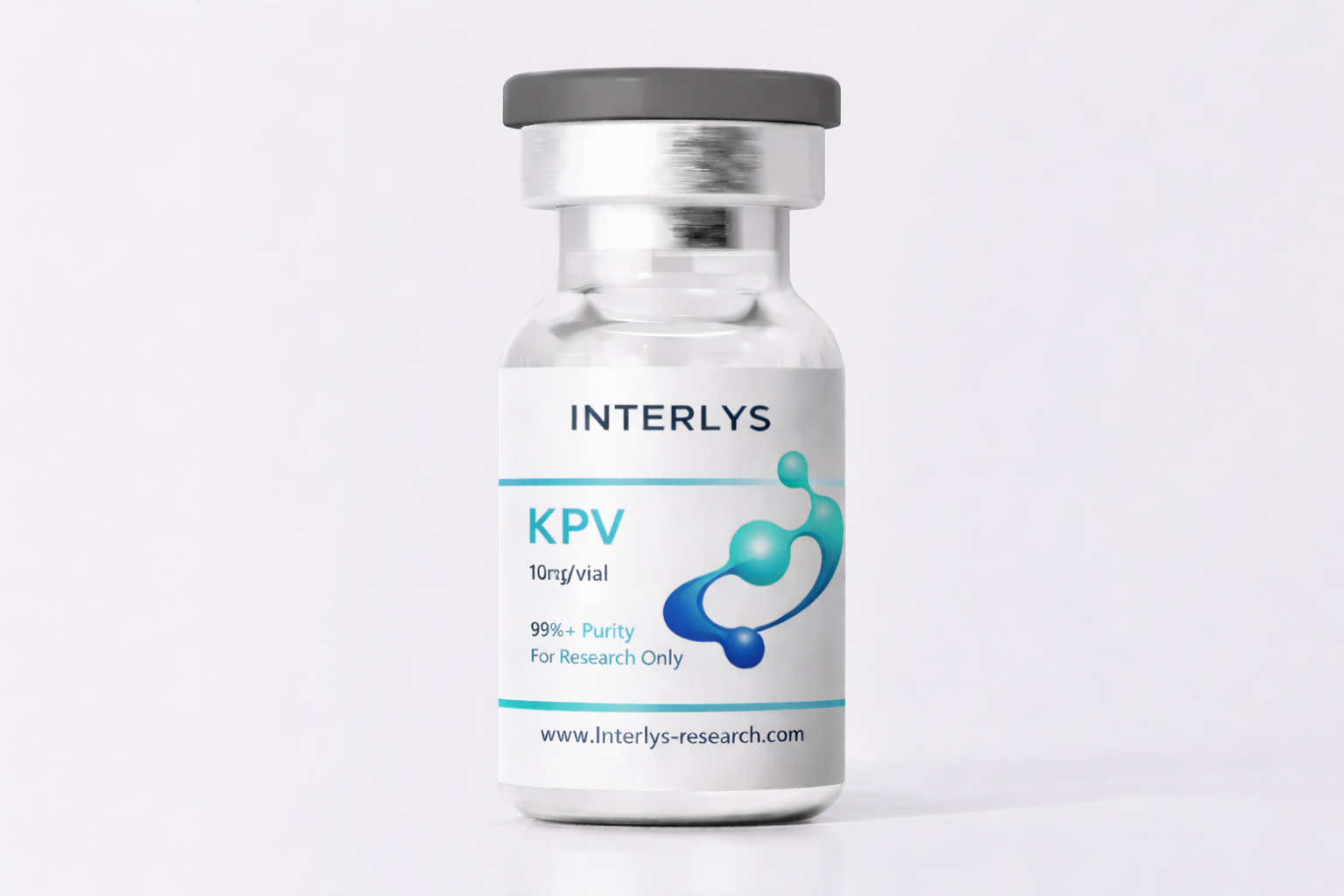
KPV is a short tripeptide (sequence: Lys-Pro-Val) corresponding to the C-terminal fragment of α-melanocyte-stimulating hormone (α-MSH 11–13). It is studied mainly for anti-inflammatory and barrier/protective effects in experimental models (skin and gut inflammation are common research areas).
Molecular Formula: C₁₆H₃₀N₄O₄
Molecular Weight: 342.43 g/mol
CAS Number: 67727-97-3
What Are the Effects of KPV?
KPV is recognized for several key functions:
-
Anti-inflammatory Activity: Frequently reported to reduce inflammatory signaling and cytokine-related responses in experimental systems.
-
Barrier / Tissue Protection Interest: Studied in contexts like intestinal inflammation models and epithelial protection.
-
Potential Modulation of NF-κB Pathway: Several mechanistic discussions link melanocortin-derived tripeptides to reduced NF-κB activation in inflammation models.
How Does It Work?
KPV is often described as the minimal C-terminal sequence of α-MSH required to convey anti-inflammatory signaling in some models.
Mechanistically, research indicates KPV can reduce inflammatory pathway activation (including NF-κB and MAPK signaling) in intestinal epithelial/immune cell models, and one well-cited line of work suggests its cellular effects can involve the PepT1 di-/tripeptide transporter in the gut.
Scientific Evidence and Research Status
KPV has a meaningful preclinical literature (cell and animal studies) supporting anti-inflammatory potential, including work in models of peritonitis and colitis.
However, compared with widely approved anti-inflammatory drugs, large-scale standardized human clinical evidence is limited, so it remains best characterized as a compound of research interest rather than a universally established therapy.
Role in Sports and Performance Contexts
KPV is not typically discussed as a classic performance-enhancing hormone peptide; interest is more linked to inflammation modulation and recovery narratives. For competitive athletes, the safest approach is to verify any substance against the current WADA Prohibited List (updated annually) and use official medication-check resources when relevant.
Standard Dosage
Administer 500-1,500 mcg daily: subcutaneous for systemic effects
These values reflect controlled experimental protocols and do not define a universal human dosing standard.
Storage Instructions
Once the peptides are reconstituted (mixed with bacteriostatic water), they must be stored in the fridge to maintain stability. After reconstitution, the peptides will remain stable for up to 30 days.
Lyophilization is a unique dehydration process, also known as cryodesiccation, where the peptides are frozen and then subjected to low pressure. This causes the water in the peptide vial to sublimate directly from solid to gas, leaving behind a stable, crystalline white structure known as lyophilized peptide. The puffy white powder can be stored at room temperature until you’re ready to reconstitute it with bacteriostatic water.
Once peptides have been received, it is imperative that they are kept cold and away from light. If the peptides will be used immediately, or in the next several days, weeks or months, short-term refrigeration under 4℃ (39℉) is generally acceptable. Lyophilized peptides are usually stable at room temperatures for several weeks or more, so if they will be utilized within weeks or months such storage is typically adequate.However, for longer term storage (several months to years) it is more preferable to store peptides in a freezer at -80℃ (-112℉). When storing peptides for months or even years, freezing is optimal in order to preserve the peptide’s stability.
Reviews
There are no reviews yet.