
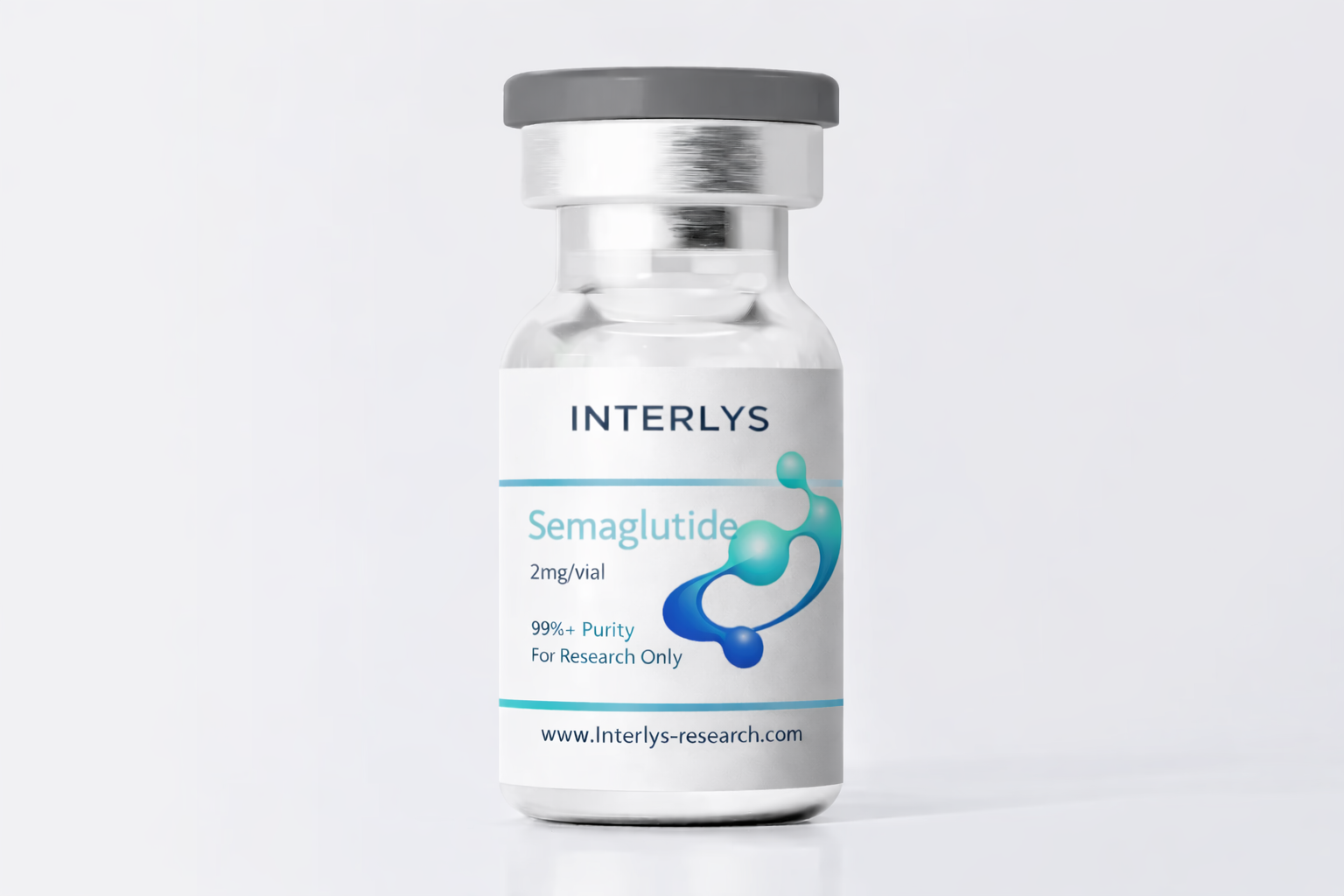
Description
Semaglutide is a synthetic peptide that acts as a GLP-1 (glucagon-like peptide-1) receptor agonist. It is designed to improve blood-glucose regulation and reduce appetite through incretin-based signaling. Semaglutide is used clinically for type 2 diabetes (e.g., Ozempic® / Rybelsus®) and long-term weight management (e.g., Wegovy®).
Molecular Formula: C187H291N45O59
Molecular Weight: ~4113.6 g/mol
CAS Number: 910463-68-2
What Are the Effects of Semaglutide?
Semaglutide is recognized for several key effects:
-
Improved Glycemic Control: Enhances glucose-dependent insulin secretion and reduces inappropriate glucagon release, improving HbA1c in type 2 diabetes.
-
Weight Reduction: Lowers appetite and caloric intake, leading to clinically significant weight loss in many patients.
-
Delayed Gastric Emptying (Early Treatment): Can slow stomach emptying, contributing to satiety and sometimes gastrointestinal side effects.
-
Cardiometabolic Interest: Studied/used for reducing cardiovascular risk in certain high-risk patient groups depending on product indication and region.
How Does It Work?
Semaglutide mimics the action of natural GLP-1, an incretin hormone released after eating. By activating GLP-1 receptors, it:
-
increases insulin secretion only when glucose is elevated (glucose-dependent effect),
-
reduces glucagon secretion,
-
acts on the brain’s satiety centers to reduce appetite,
-
and can slow gastric emptying (especially during initiation).
Scientific Evidence and Research Status
Unlike many “research peptides,” semaglutide is supported by extensive human clinical trial evidence and is approved in multiple forms/indications (diabetes and weight management, depending on formulation). Ongoing research continues to evaluate long-term outcomes, comparative effectiveness, and expanded cardiometabolic indications.
Role in Sports and Performance Contexts
In physique and performance circles, semaglutide is discussed mainly for appetite suppression and weight loss. However, non-medical use can be risky (side effects, inadequate nutrition, and misuse).
For anti-doping, athletes should rely on the current WADA Prohibited List and official medication-check tools (e.g., GlobalDRO), because status and rules can be context-dependent.
Standard Dosage
Start with 0.25 mg once weekly for 4 weeks to allow tolerance buildup. Increase to 0.5 mg weekly in weeks 5-8 if tolerated.
Progress to 1 mg weekly (weeks 9-12), then up to 2.4 mg weekly for weight loss maintenance (Wegovy protocol) or 2 mg for glycemic control (Ozempic). Administer any day, consistent timing, with or without food.
Concentration Breakdown
Reconstituting 5 mg (5000 mcg) of semaglutide in 2 mL yields a concentration of:
5000 mcg ÷ 2 mL = 2500 mcg/mL
Weekly Initiation-Level Example (4 Weeks)
A widely used initiation dose in approved injectable schedules is 0.25 mg once weekly (used for initiation/tolerability).
-
Dose: 0.25 mg = 250 mcg
-
Volume: 250 mcg ÷ 2500 mcg/mL = 0.1 mL
-
In a 50-unit syringe: 0.1 mL = 10 units
Maintenance-Level Example (4 Weeks)
Approved maintenance dosing depends on the product/indication. Examples include 0.5 mg once weekly for diabetes titration/maintenance and 2.4 mg once weekly for weight management maintenance (after escalation).
Example A: 0.5 mg (500 mcg) once weekly
-
Volume: 500 mcg ÷ 2500 mcg/mL = 0.2 mL
-
In a 50-unit syringe: 0.2 mL = 20 units
Example B: 2.4 mg (2400 mcg) once weekly
-
Volume: 2400 mcg ÷ 2500 mcg/mL = 0.96 mL
-
In a 50-unit syringe: 0.96 mL = 96 units
Storage Instructions
Once the peptides are reconstituted (mixed with bacteriostatic water), they must be stored in the fridge to maintain stability. After reconstitution, the peptides will remain stable for up to 30 days.
Lyophilization is a unique dehydration process, also known as cryodesiccation, where the peptides are frozen and then subjected to low pressure. This causes the water in the peptide vial to sublimate directly from solid to gas, leaving behind a stable, crystalline white structure known as lyophilized peptide. The puffy white powder can be stored at room temperature until you’re ready to reconstitute it with bacteriostatic water.
Once peptides have been received, it is imperative that they are kept cold and away from light. If the peptides will be used immediately, or in the next several days, weeks or months, short-term refrigeration under 4℃ (39℉) is generally acceptable. Lyophilized peptides are usually stable at room temperatures for several weeks or more, so if they will be utilized within weeks or months such storage is typically adequate.However, for longer term storage (several months to years) it is more preferable to store peptides in a freezer at -80℃ (-112℉). When storing peptides for months or even years, freezing is optimal in order to preserve the peptide’s stability.
Reviews
There are no reviews yet.