
Description
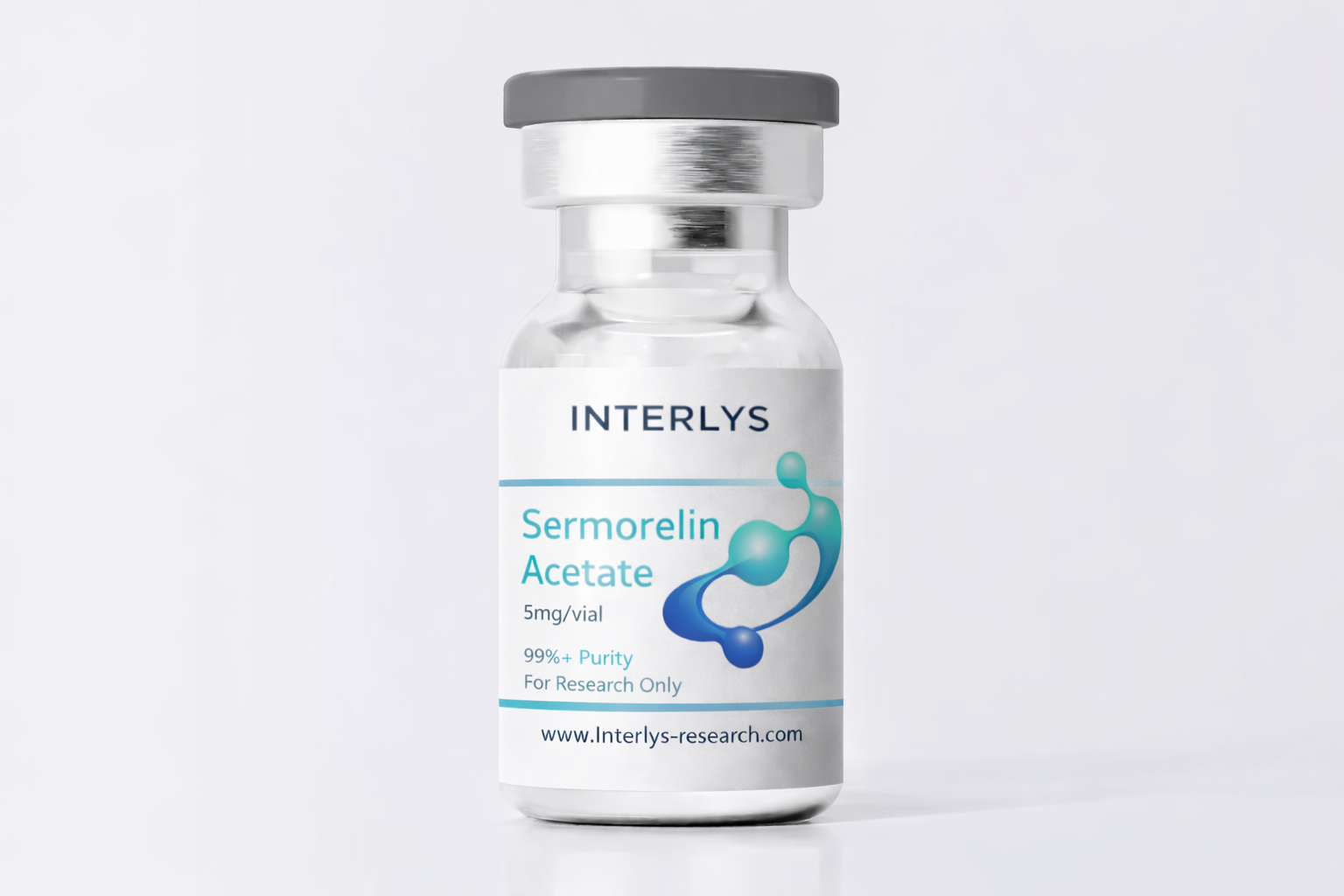
Sermorelin (also known as GHRH (1–29); formerly marketed as Geref) is a synthetic peptide analogue of growth hormone–releasing hormone (GHRH). It was developed to stimulate the pituitary gland to release endogenous growth hormone (GH), mainly in diagnostic and endocrine research/clinical contexts.
Molecular Formula: C₁₄₉H₂₄₆N₄₄O₄₂S
Molecular Weight: ~3357.9 g/mol
CAS Number: 86168-78-7
What Are the Effects of Sermorelin?
Sermorelin is recognized for several key effects:
-
Increased Growth Hormone Secretion: Stimulates pulsatile GH release from the pituitary.
-
Indirect IGF-1 Changes: Because GH can increase hepatic IGF-1 production, IGF-1 may rise indirectly depending on context and individual response.
-
Diagnostic Utility: Historically used to assess GH secretory capacity in suspected growth hormone deficiency evaluations.
How Does It Work?
Sermorelin works by binding to the growth hormone–releasing hormone receptor (GHRHR) on pituitary somatotroph cells, mimicking endogenous GHRH and triggering intracellular signaling that promotes GH release. Because it stimulates endogenous release (rather than supplying GH directly), it tends to preserve the body’s feedback regulation (e.g., via somatostatin) in physiological patterns.
Scientific Evidence and Research Status
Sermorelin has published human pharmacology/clinical literature and was previously available as an FDA-approved product for diagnostic/endocrine use, though its market availability has changed over time. Reviews discuss its endocrine effects and rationale as a more “physiologic” GH-axis stimulation approach than exogenous GH in certain contexts.
Role in Sports and Performance Contexts
Because sermorelin stimulates the GH axis, it is directly addressed by anti-doping rules. WADA lists GHRH and its analogues, explicitly including sermorelin, under prohibited growth hormone releasing factors.
Standard Dosage
Administer 300 mcg nightly (0.3 mg), 5-7 days weekly, for cycles of 3-6 months in therapeutic research protocols. Adjustments depend on age, weight, and response.
These values reflect reported ranges, not a one-size-fits-all guideline.
Storage Instructions
Once the peptides are reconstituted (mixed with bacteriostatic water), they must be stored in the fridge to maintain stability. After reconstitution, the peptides will remain stable for up to 30 days.
Lyophilization is a unique dehydration process, also known as cryodesiccation, where the peptides are frozen and then subjected to low pressure. This causes the water in the peptide vial to sublimate directly from solid to gas, leaving behind a stable, crystalline white structure known as lyophilized peptide. The puffy white powder can be stored at room temperature until you’re ready to reconstitute it with bacteriostatic water.
Once peptides have been received, it is imperative that they are kept cold and away from light. If the peptides will be used immediately, or in the next several days, weeks or months, short-term refrigeration under 4℃ (39℉) is generally acceptable. Lyophilized peptides are usually stable at room temperatures for several weeks or more, so if they will be utilized within weeks or months such storage is typically adequate.However, for longer term storage (several months to years) it is more preferable to store peptides in a freezer at -80℃ (-112℉). When storing peptides for months or even years, freezing is optimal in order to preserve the peptide’s stability.
Reviews
There are no reviews yet.