
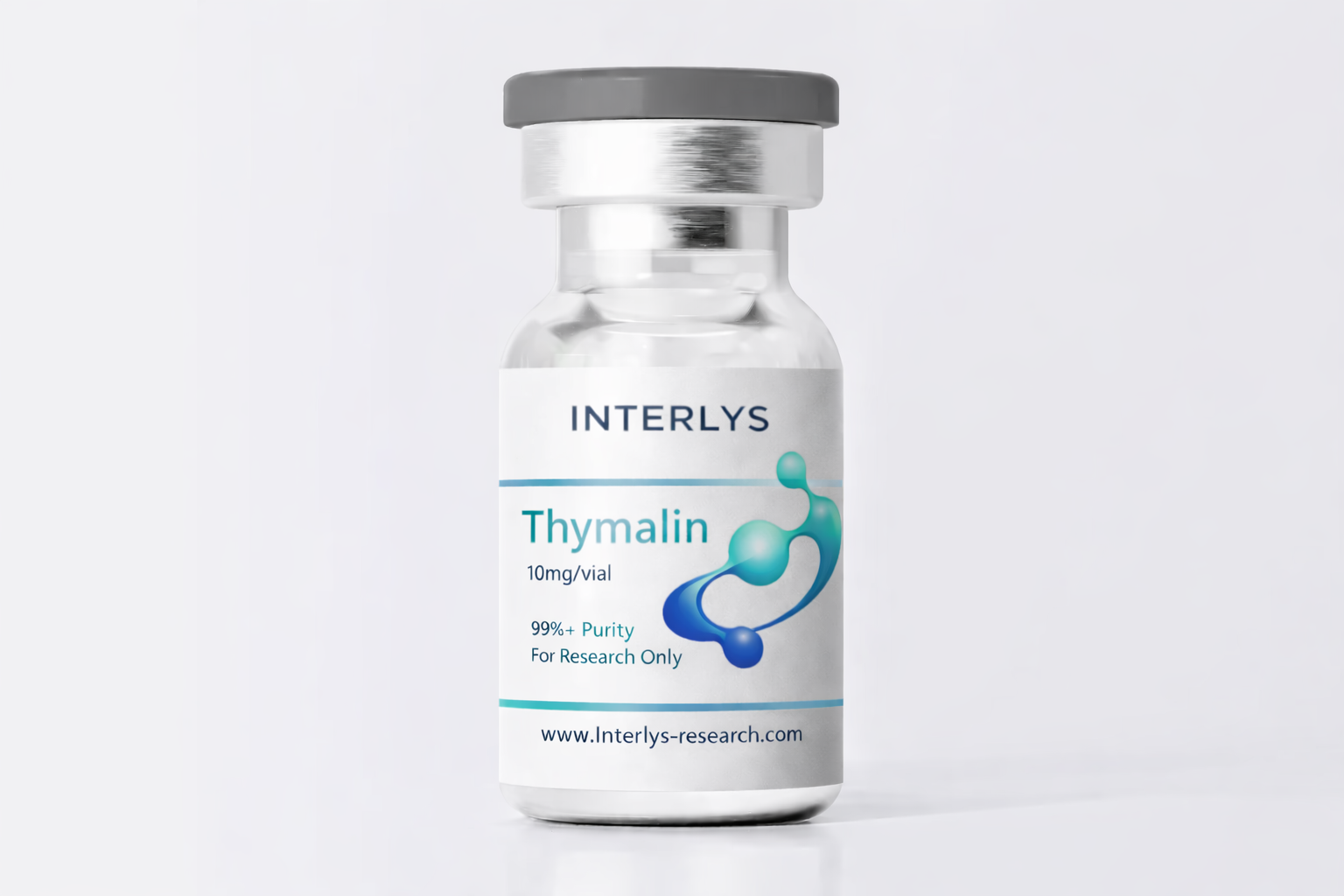
Description
Thymalin is a thymus-derived polypeptide complex (historically isolated from calf thymus) studied and used in some countries as an immunomodulatory preparation. In the scientific literature, it’s described as a mixture whose immunoprotective activity is linked to short peptide components such as KE, EW (thymogen), and EDP, which have been discussed as regulators of gene expression and immune-cell functions.
Note (important): In many “peptide” catalogs, “Thymalin” is sometimes sold as thymulin (also called “thymic factor”), a nonapeptide with a defined sequence. This creates confusion because the drug thymalin is a mixture, while thymulin is a single peptide.
If “Thymalin” refers to the defined peptide thymulin (common in catalogs):
Molecular Formula: C₃₃H₅₄N₁₂O₁₅
Molecular Weight: ~858.85 g/mol
CAS Number: 63958-90-7
What Are the Effects of Thymalin?
Thymalin is recognized for several key functions (mainly from clinical use reports and mechanistic literature):
-
Immune System Modulation: Associated with restoration/normalization of immune-cell balance and functional activity in immune dysfunction contexts.
-
Support in Infection/Inflammation Contexts: Discussed in relation to severe infections and inflammatory states (including published reports in COVID-19 settings).
-
Hematopoiesis / Recovery Contexts: Cited in literature as used when immunity and blood formation are suppressed (e.g., after chemo/radiotherapy) in certain clinical traditions.
How Does It Work?
Thymalin is described as an epigenetic regulator-like immunomodulator in some reviews: its short-peptide components (KE, EW, EDP) are proposed to interact with DNA and/or histone proteins, influencing gene expression and the synthesis of immune-related proteins (cytokines, heat-shock proteins, etc.), and affecting differentiation/proliferation/apoptosis of immune cells.
Scientific Evidence and Research Status
Thymalin has a body of published work (notably from Russian research/clinical practice), including reviews and clinical observations in different immune-related conditions. A randomized controlled clinical study in older patients with severe COVID-19 reported improved laboratory and clinical recovery markers in the thymalin group compared with standard therapy alone.
However, it remains less globally standardized than many widely approved immunology drugs, and interpretation should stay within the limits of the available clinical evidence and regional regulatory context.
Role in Sports and Performance Contexts
Thymalin is sometimes mentioned in “recovery” discussions because it relates to immune function. For competitive sport, the safest approach is to verify any compound against the current WADA Prohibited List, which is updated annually. (Thymalin is not typically listed by name like classic anabolic agents, but rules can apply by category depending on substance and context.)
Standard Dosage
Administer 10 mg per day for 10 consecutive days.
In a controlled clinical trial in severe COVID-19 older patients, thymalin was administered as 10 mg daily for 10 days (study regimen).
These figures reflect a specific published protocol and do not define a one-size-fits-all guideline across all uses.
Storage Instructions
Once the peptides are reconstituted (mixed with bacteriostatic water), they must be stored in the fridge to maintain stability. After reconstitution, the peptides will remain stable for up to 30 days.
Lyophilization is a unique dehydration process, also known as cryodesiccation, where the peptides are frozen and then subjected to low pressure. This causes the water in the peptide vial to sublimate directly from solid to gas, leaving behind a stable, crystalline white structure known as lyophilized peptide. The puffy white powder can be stored at room temperature until you’re ready to reconstitute it with bacteriostatic water.
Once peptides have been received, it is imperative that they are kept cold and away from light. If the peptides will be used immediately, or in the next several days, weeks or months, short-term refrigeration under 4℃ (39℉) is generally acceptable. Lyophilized peptides are usually stable at room temperatures for several weeks or more, so if they will be utilized within weeks or months such storage is typically adequate.However, for longer term storage (several months to years) it is more preferable to store peptides in a freezer at -80℃ (-112℉). When storing peptides for months or even years, freezing is optimal in order to preserve the peptide’s stability.
Reviews
There are no reviews yet.