
Description
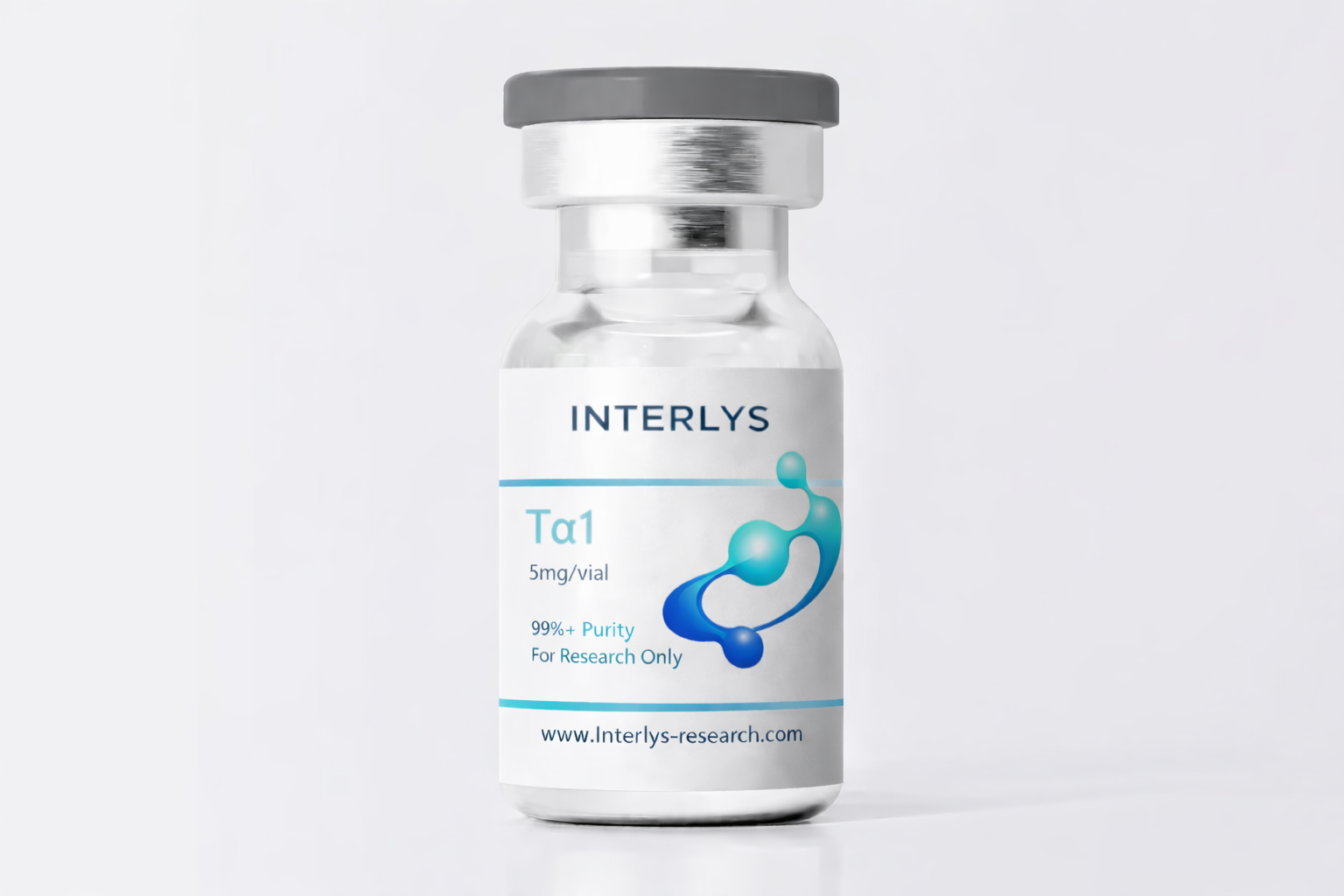
Thymosin Alpha-1 (Tα1), also known by the drug name thymalfasin, is a synthetic version of a naturally occurring thymic peptide involved in immune regulation. It has been studied and used as an immunomodulatory agent, particularly in contexts where enhancing or balancing immune responses may be beneficial (e.g., certain infections, immune dysfunction settings, and as an adjunct in some therapies).
Molecular Formula: C₁₂₉H₂₁₅N₃₃O₅₅
Molecular Weight: ~3108.28 g/mol
CAS Number: 62304-98-7
What Are the Effects of Thymosin Alpha-1?
Thymosin Alpha-1 is recognized for several key functions:
-
Immune System Modulation: Supports immune signaling and may enhance immune cell function in certain settings.
-
T-cell Related Effects: Frequently discussed in relation to improving aspects of adaptive immune responses.
-
Support of Antigen Presentation: Research indicates it can influence dendritic cell maturation/activation, which is important for initiating immune responses.
-
Adjunct-Therapy Interest: Studied as an add-on in various clinical/research contexts (e.g., infections, immune dysregulation), though outcomes depend on indication and study design.
How Does It Work?
Thymosin Alpha-1 acts as an immunomodulator rather than a classic “single-target” hormone peptide. Mechanistic studies suggest it can enhance dendritic cell differentiation and activation, improving antigen-presenting capacity and downstream adaptive immunity. Some experimental work links these effects to signaling pathways such as p38 MAPK and NF-κB, which are important in immune activation and cytokine regulation.
Scientific Evidence and Research Status
Unlike many “research-only peptides,” thymosin alpha-1 (thymalfasin) has a substantial body of human clinical research in different indications. Regulatory status varies by country and indication, and it has been discussed in official drug-substance and clinical-use contexts (for example, in hepatitis-related discussions where dosing regimens are described in medical literature and regulatory documents).
Even with this evidence base, effectiveness is still indication-dependent, and ongoing research continues to refine where it offers the most benefit and in what combinations.
Role in Sports and Performance Contexts
In sports or performance circles, Tα1 is sometimes mentioned because it relates to immune function and recovery from illness. However, it is primarily an immunomodulatory compound studied for medical contexts rather than a proven performance enhancer.
For competitive athletes, the safest approach is always to verify any substance against the current WADA Prohibited List, which is updated annually.
Standard Dosage
Administer 1.6 mg twice weekly (total 3.2 mg) for chronic infections or general immunity, or 1.5 mg every 3-7 days long-term (up to 6-12 months).
These figures reflect published research/clinical ranges, not a universal “one-size-fits-all” guideline.
Storage Instructions
Once the peptides are reconstituted (mixed with bacteriostatic water), they must be stored in the fridge to maintain stability. After reconstitution, the peptides will remain stable for up to 30 days.
Lyophilization is a unique dehydration process, also known as cryodesiccation, where the peptides are frozen and then subjected to low pressure. This causes the water in the peptide vial to sublimate directly from solid to gas, leaving behind a stable, crystalline white structure known as lyophilized peptide. The puffy white powder can be stored at room temperature until you’re ready to reconstitute it with bacteriostatic water.
Once peptides have been received, it is imperative that they are kept cold and away from light. If the peptides will be used immediately, or in the next several days, weeks or months, short-term refrigeration under 4℃ (39℉) is generally acceptable. Lyophilized peptides are usually stable at room temperatures for several weeks or more, so if they will be utilized within weeks or months such storage is typically adequate.However, for longer term storage (several months to years) it is more preferable to store peptides in a freezer at -80℃ (-112℉). When storing peptides for months or even years, freezing is optimal in order to preserve the peptide’s stability.
Reviews
There are no reviews yet.